Future Forward
Key Tech
Key Tech
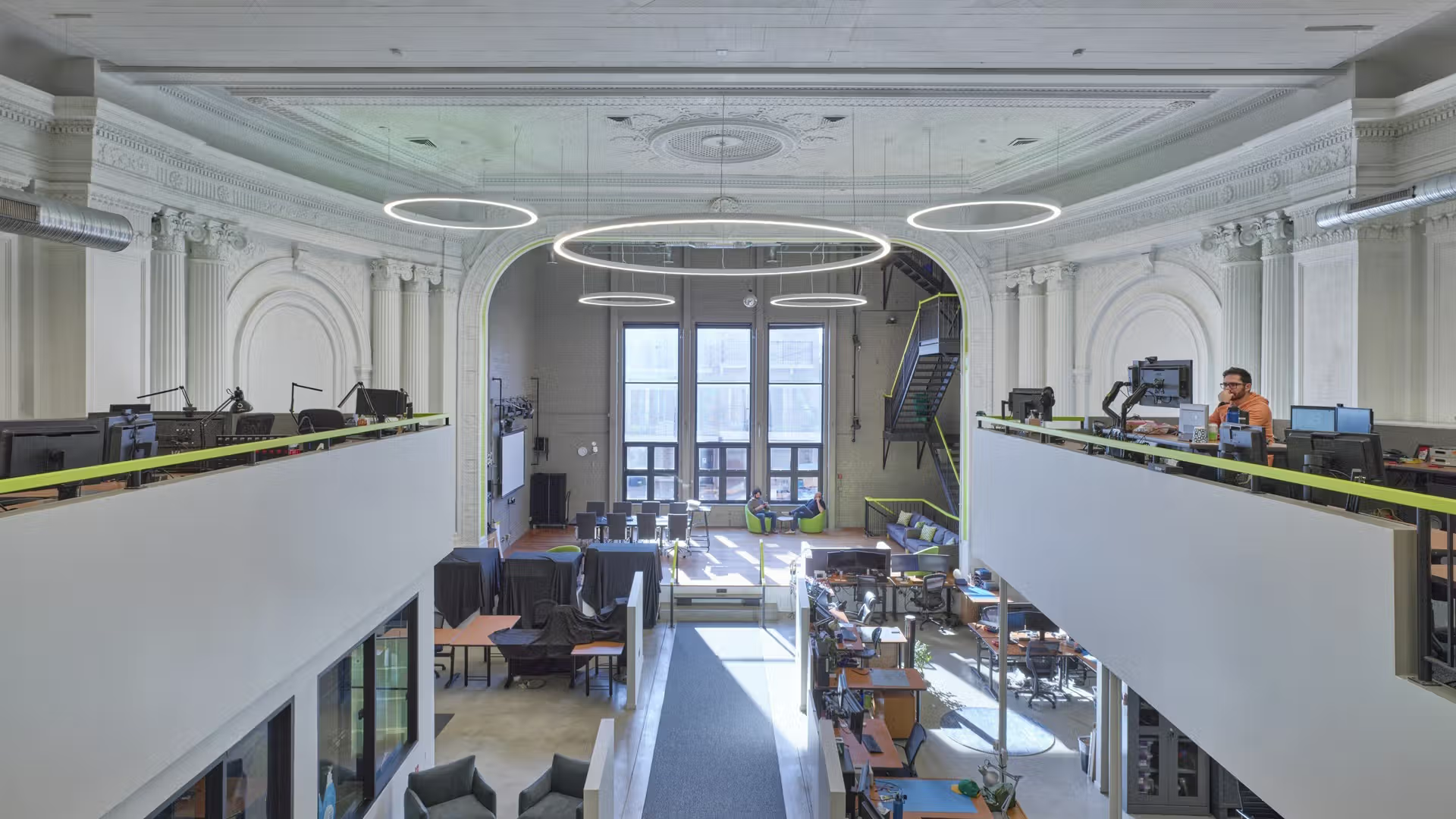
For nearly two decades, Key Tech, a multidisciplinary product design and development firm, has occupied Baltimore’s historic McHenry Theater. As the company continued to grow, an adjacent nineteenth-century school building presented an opportunity not only to expand, but to reimagine how the company’s people, processes, and spaces work together.
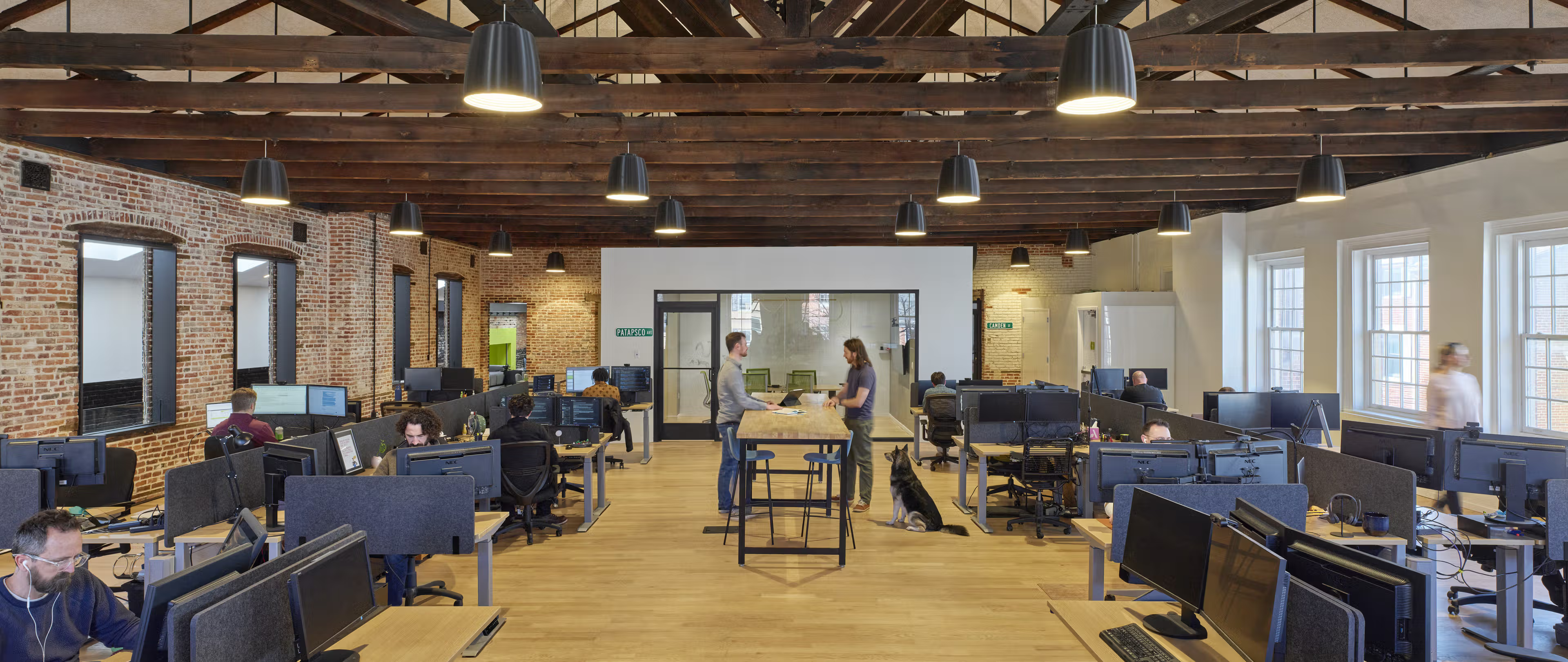
Our design transforms two distinct historic structures into a unified workplace that celebrates creativity, collaboration, and making, all while embracing the unique character of each building. The expanded workspace serves as a physical expression of Key Tech’s culture, supporting innovation, growth, and continued investment in Baltimore’s creative economy.

It’s so important to our team to have an inspirational, cohesive workspace. Combining these two historic spaces achieves that and supports our long-term growth plans.
Making Connections
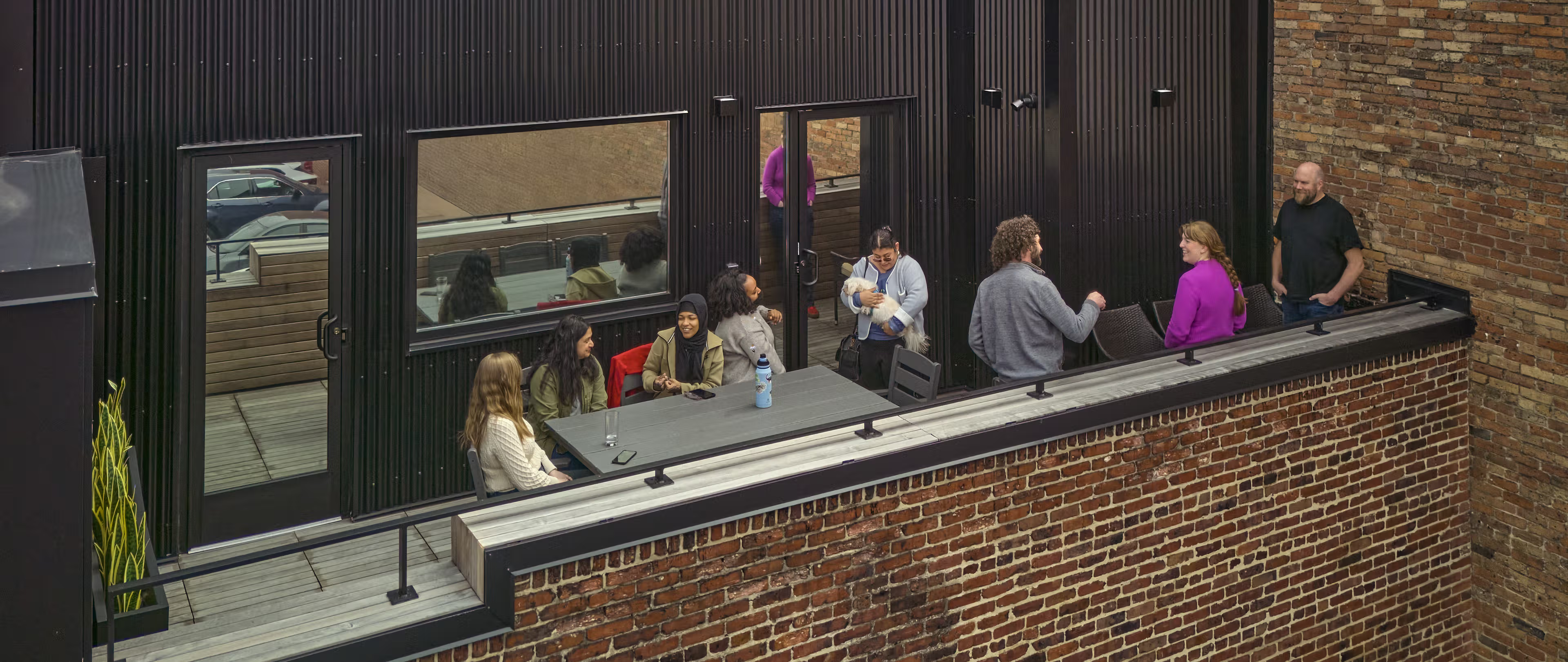
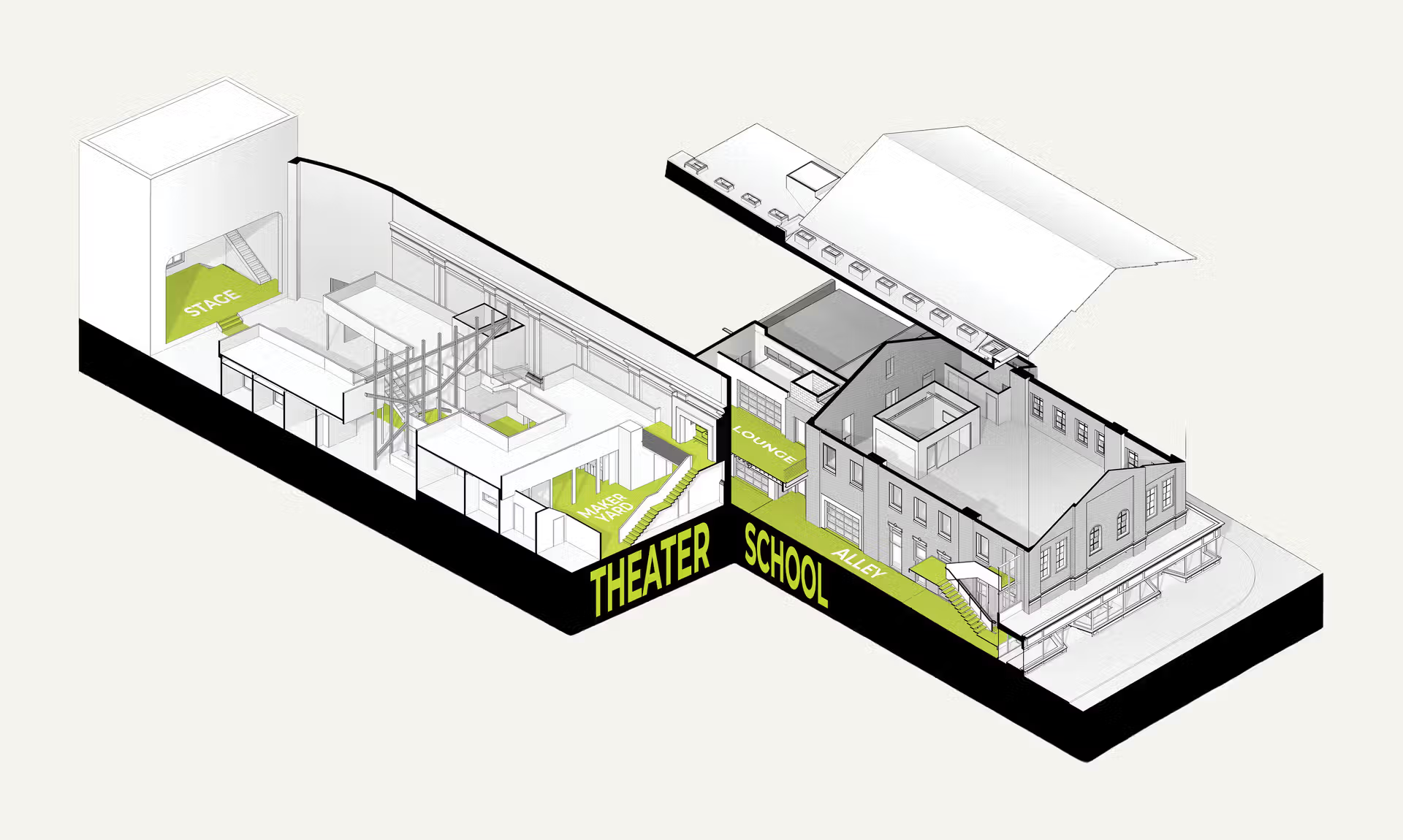
A former service alley between the theater and school has been enclosed and reimagined as a light-filled circulation spine and social hub. It links the two buildings through a sequence of project rooms, gathering spaces, and collaborative environments.
Freedom of Choice
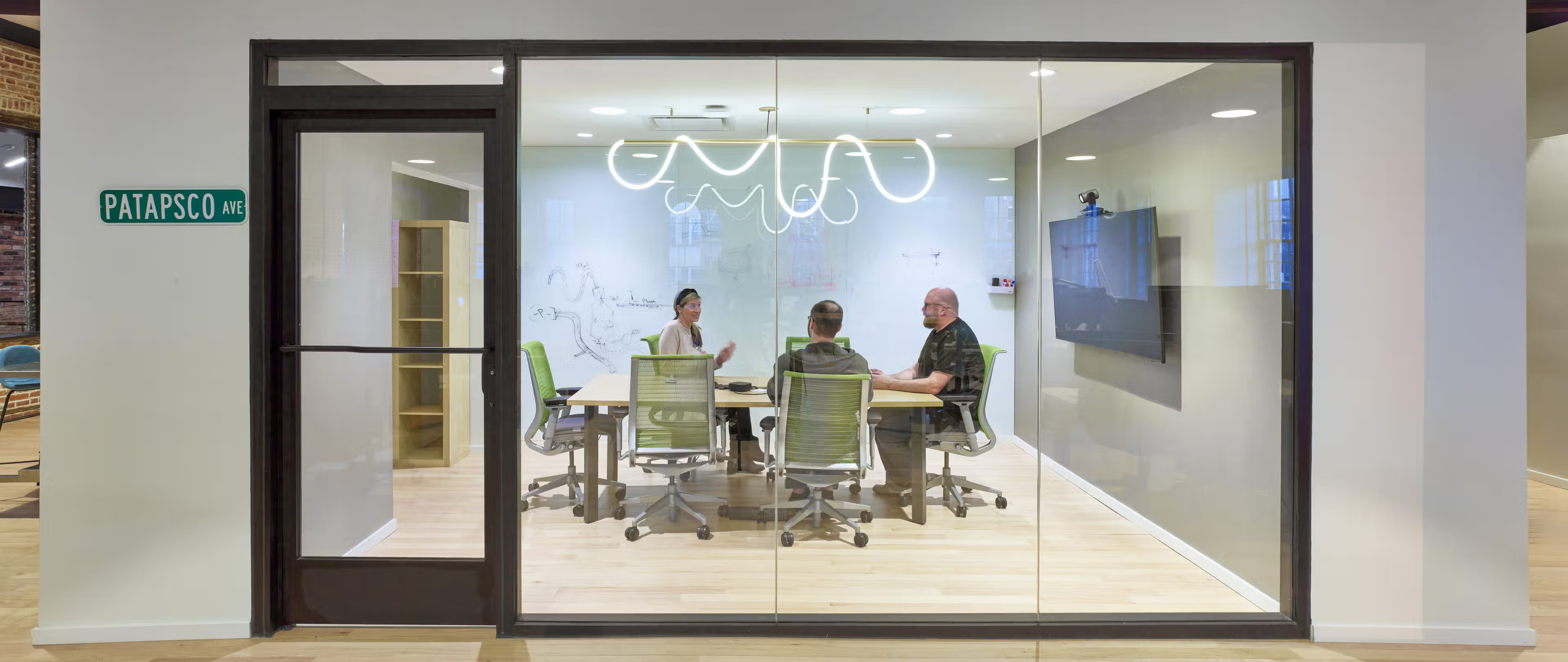
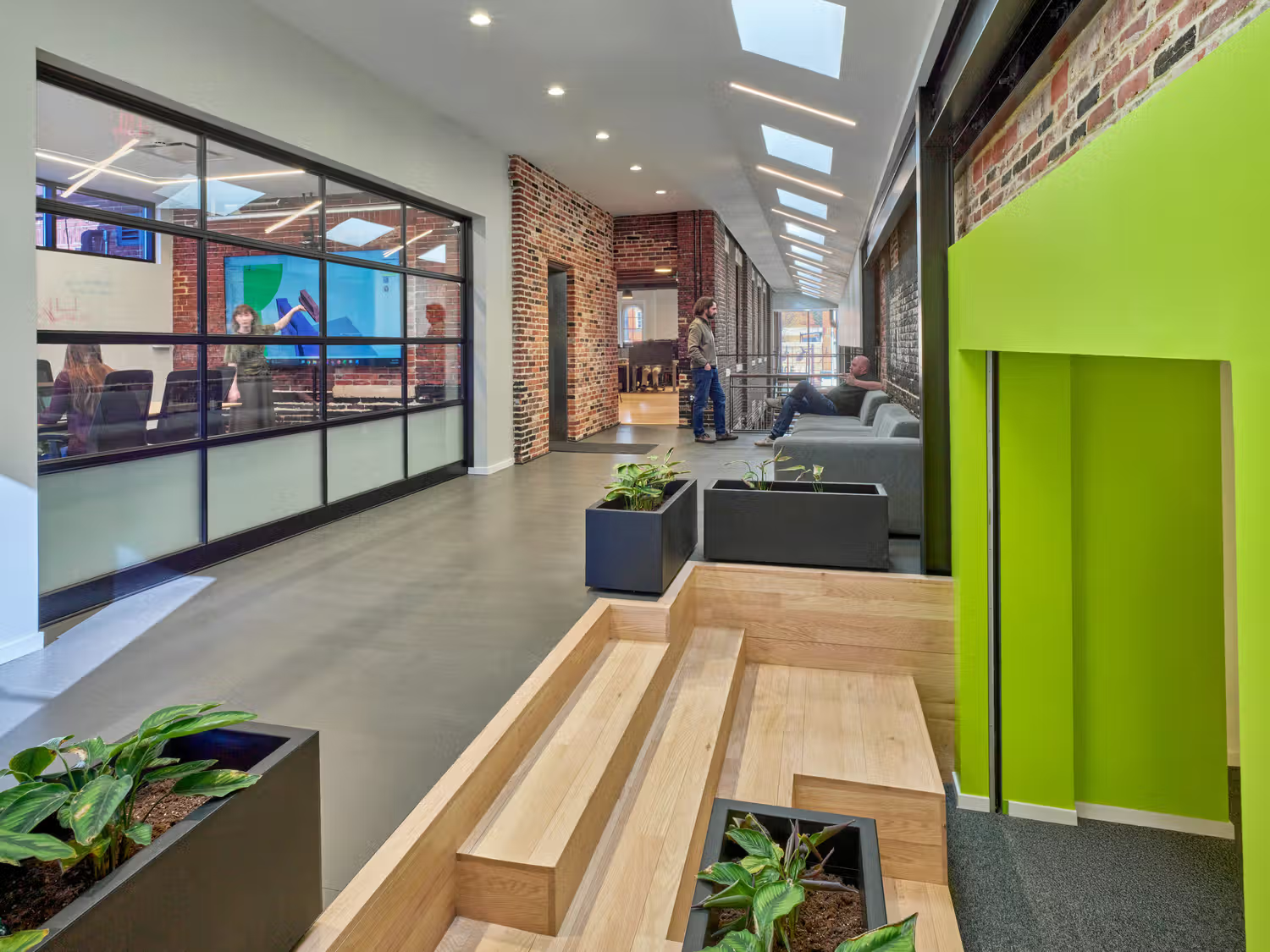
Open studios, focus rooms, conference areas, lounges, and maker spaces support a wide range of work styles, allowing staff to select the environment that best supports their current task. Layered views and open sightlines encourage curiosity and collaboration across disciplines.
Creating Together
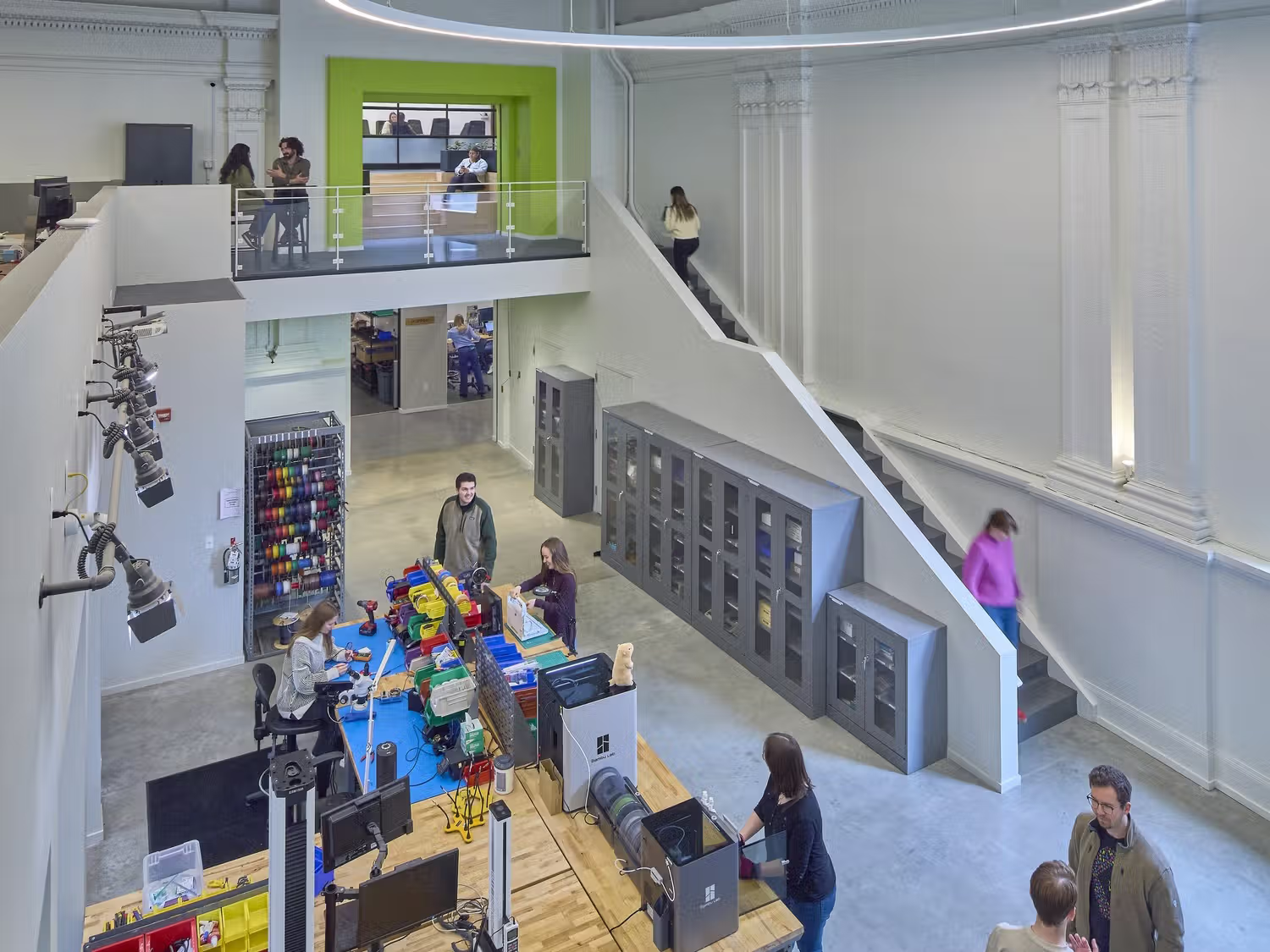
Where the buildings connect, a two-story Maker Yard provides shared access to prototyping tools and fabrication resources, making the firm’s creative process visible throughout the workplace.
Building on History
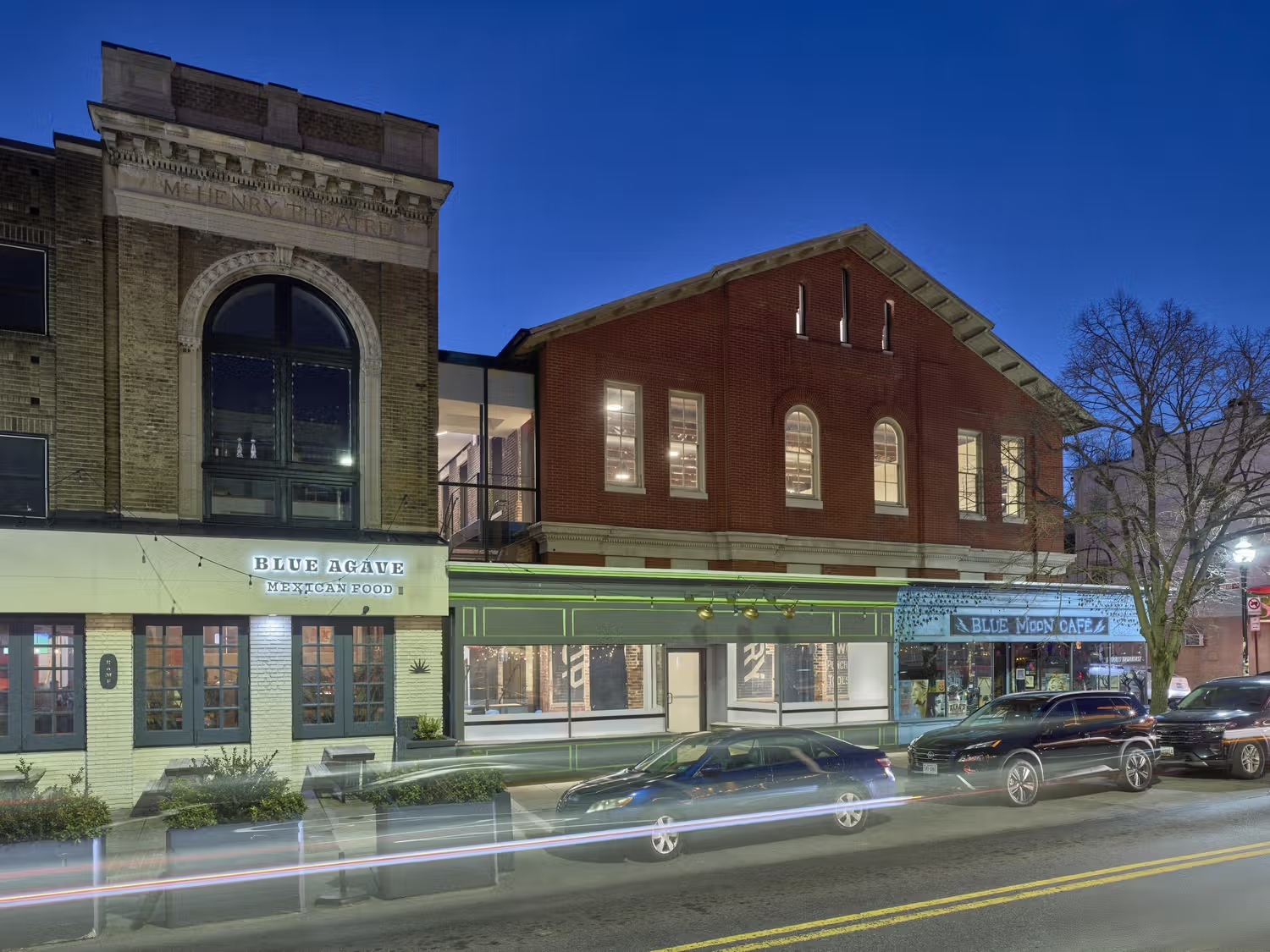
The McHenry Theater was built in 1917 as a 1,200-seat movie house. When the theater closed in 1971, the building was subdivided and rented as commercial space. Key Tech moved into the auditorium portion in 2002 and expanded into another area in 2015. Primary School No. 15 was built in 1854 and later served a variety of commercial uses; part of the first floor is still occupied by a restaurant. Our work extends both buildings’ legacies by helping them continue to evolve as active contributors to Baltimore’s future.