The Future of a Landmark
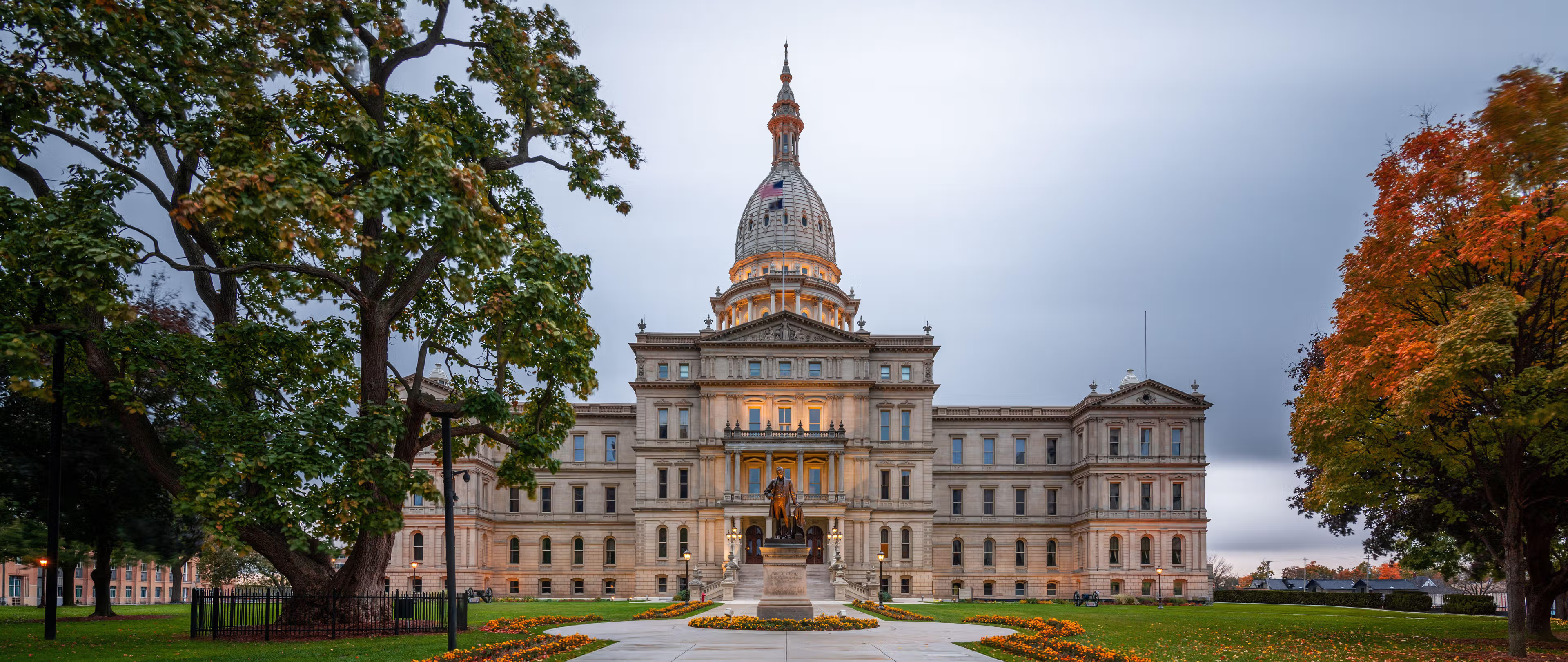
Michigan State Capitol
Michigan State Capitol
We have a long history with the Michigan State Capitol Commission to implement projects that maintain, restore, and enhance the historic Capitol. All of our work at this National Historic Landmark seeks to cultivate the building’s Victorian character and fabric while improving its function as a seat of government.
We served as the implementing architect on the Capitol’s award-winning restoration in the 1990s. Since then, we have continued to address the building’s ongoing preservation and modernization needs. Our latest efforts are a digital twin for the historic building and a major underground expansion focused on welcoming and serving the Capitol’s 100,000+ annual visitors.


A Victorian Gem
The present Michigan State Capitol building was dedicated in 1879. It was designed by Detroit architect Elijah E. Myers, who went on to design the state capitols of Texas and Colorado. The Capitol’s interior is one of the country’s finest examples of Victorian decorative arts.

Saving the Capitol
After more than a century of service, critics called for the “obsolete” Capitol to be demolished and replaced. A public outcry spurred a massive modernization effort, during which we completed a comprehensive restoration of the building’s exterior and the interior of the Governor’s Wing.
Data-Driven Decisions
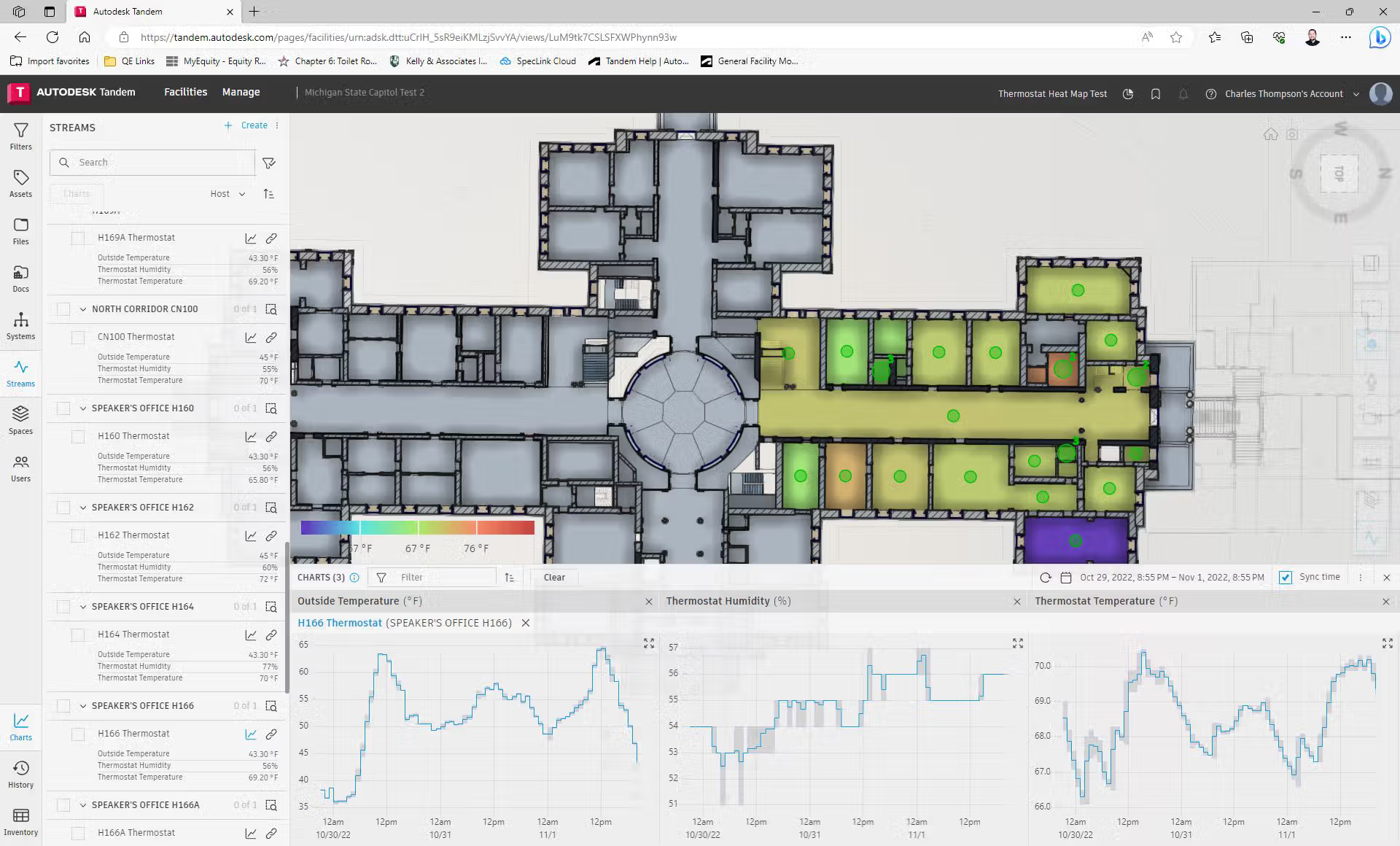
We are integrating operational information and live data into a digital twin of the Capitol, allowing stewards to monitor a variety of metrics in real time, including temperature and humidity levels in areas with especially delicate historic fabric.
Informed and Connected
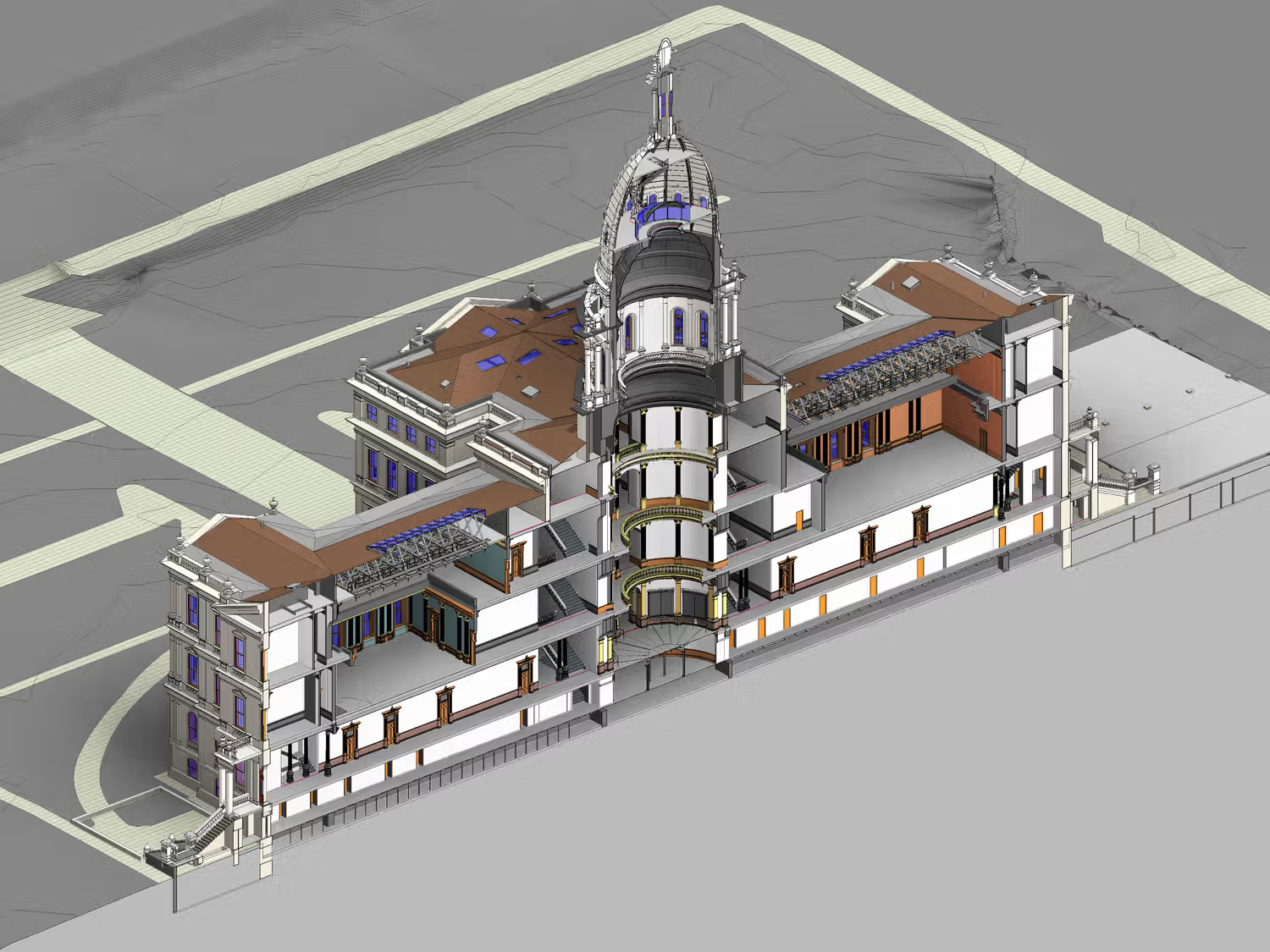
The Capitol team sees their digital twin as a critical resource for connecting their facilities, construction, and decorative arts teams together.
During day-to-day operations, the digital twin provides a common source of information and keeps everyone informed. If an issue arises, the twin gives the entire team access to the same real-time, accurate information, allowing team members to quickly step in, coordinate, and respond together. The team can then update the twin with information about the solution.

