Video

Designing Schools for Well-Being

By 
February 19, 2026
Download our research materials
Thank you! Your submission has been received!
Oops! Something went wrong while submitting the form.
Thank you! Your submission has been received!
Oops! Something went wrong while submitting the form.
Schools do more than provide space for instruction. They shape the everyday experiences of students, teachers, and staff, and can support health, focus, and well-being.

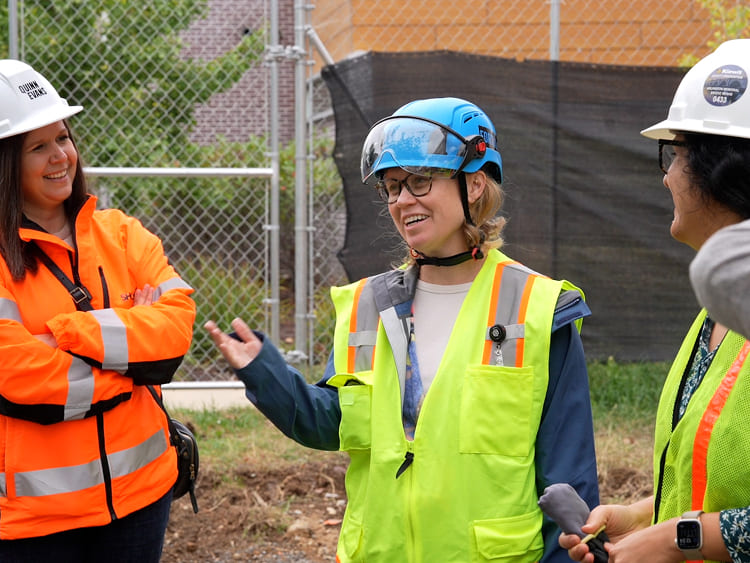
Schools do more than provide space for instruction. They shape the everyday experiences of students, teachers, and staff, and can support health, focus, and well-being. Quinn Evans’ sustainability specialist, Denise Gravelle, AIA, LEED AP BD+C, shares our philosophy for designing these important learning environments in the video below.

Denise highlights the intentional design strategies that transformed the Marie Reed Community Learning Center in Washington, DC, such as increasing daylight access throughout the existing building. Bright colors and engaging spaces also helped create an environment where students can thrive.

The Marie Reed Community Learning Center served as a case study from our American Institute of Architects Upjohn Research Initiative, developed in partnership with the University of Oregon. To learn more about our approach to daylighting in schools and office spaces, download our findings here.

Designing Schools for Well-Being

Video Transcript

In school environments, daylighting actually has been shown to really improve test outcomes and emotional well-being for students that occupy those spaces. So, daylight is something that's actually really important to get right when it comes to schools.

Schools are like mini ecosystems. They're really home to a lot of children, a lot of educators, and a lot of people that spend a good majority of their day within those buildings. So, it's really important for us, as architects and designers, to create spaces that are going to be conducive to health and well-being, but also conducive to learning in a place that's going to support intellectual stimulation for the young children that spend so much of their time in those spaces.

Marie Reed Elementary School and Community Center is a project that we worked on in DC. It was an existing building renovation project, and before the renovation, it was a building that really suffered from poor daylight exposure. The windows were really small and there wasn't great daylight within the space, and it made the whole school really dark. One of the big interventions that we did was punching larger windows in the façade to allow greater daylight penetration within the space, as well as skylights within the atrium. And the whole project was really about better daylight within the space.

Schools should be really warm and inviting and exciting. Because kids are spending so much of their time there, you really want that space to be somewhere where they feel like they can thrive and learn and grow. And at Quinn Evans, that's something that we are really focused on within our school spaces. We want them to be well lit and colorful and fun and engaging, and those are environments that we think that children really need to grow intellectually as students and as people.

Explore More