As my colleague Chris Ambridge explained in the first part of this post, school districts across the country are at a crossroads. Population shifts have left some with a surplus of school square footage relative to the number of students they serve. Some districts are closing underutilized buildings and consolidating students in fewer facilities; some are divesting of these buildings altogether.
At the same time, we’re facing a national housing shortage of more than 4 million homes. In this period of flux, we want everyone to know that historic school buildings are valuable community assets that should continue to be used, even when they’re no longer needed as educational spaces. We’ve repurposed historic schools for several news uses, including as a community center and a museum. But most often, we’ve adapted them to serve as housing—a use for which school buildings from the late 19th and early 20th centuries are ideal candidates.
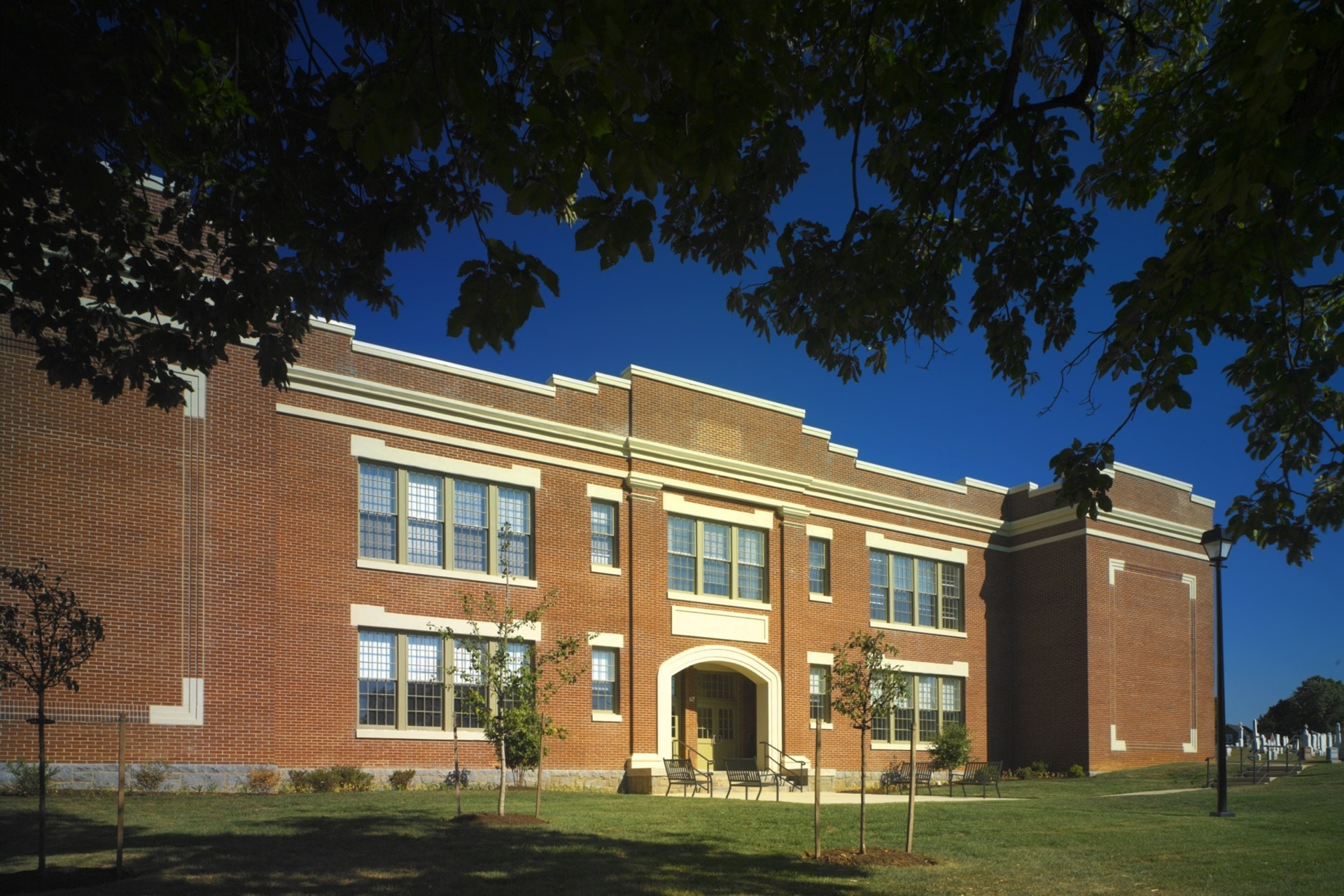
Why Convert Schools to Housing?
As repositories of both community memory and embodied carbon, existing buildings are key to healthy communities—and this is especially true for historic schools, which hold memories for generations of students. Here are some additional reasons historic schools make for great multifamily housing:
Good bones. With their masonry walls and quality craftsmanship, school buildings from the late 19th and early 20th centuries are generally very solid, even if they’ve been vacant for some time. They also feature higher ceilings, wider corridors, and larger windows than are typically found in new construction, since they weren’t designed with the goal of maximizing rentable square footage.
Established presence. Because the school building and its parking area have been in place for a long time, neighbors tend to resist their conversion to housing less than they would a new ground-up housing development that might change the look and feel of the neighborhood.
Blight prevention or reversal. Vacant buildings can quickly fall into disrepair, which can lead to neighborhood disinvestment, attract crime, and negatively impact neighbors' mental health. Conversely, when we renew a familiar building, it becomes a point of community pride.
Potential for historic tax credits (HTCs). When any historic building is renovated for an income-generating purpose, it may be eligible for federal HTCs totaling 20% of qualified rehabilitation expenditures, as well as state and local HTC programs—which can substantially offset the cost of converting a historic school to housing. For affordable housing projects, HTCs can stack with low-income housing tax credits (LIHTCs).
Our portfolio is full of examples showing how creative design and thoughtful planning can bring new purpose to buildings that once served students. Here are just a few.
Schools to Market-rate Housing
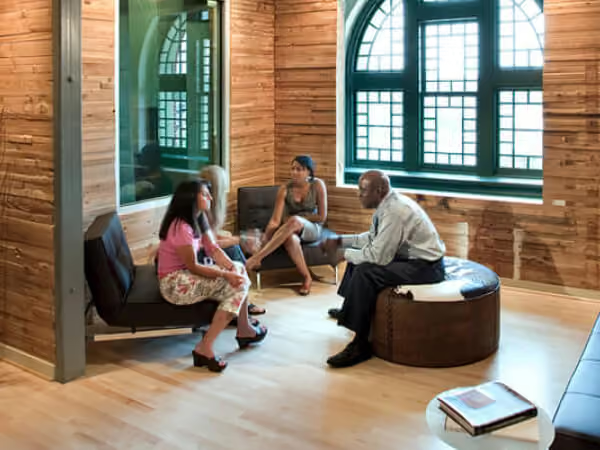
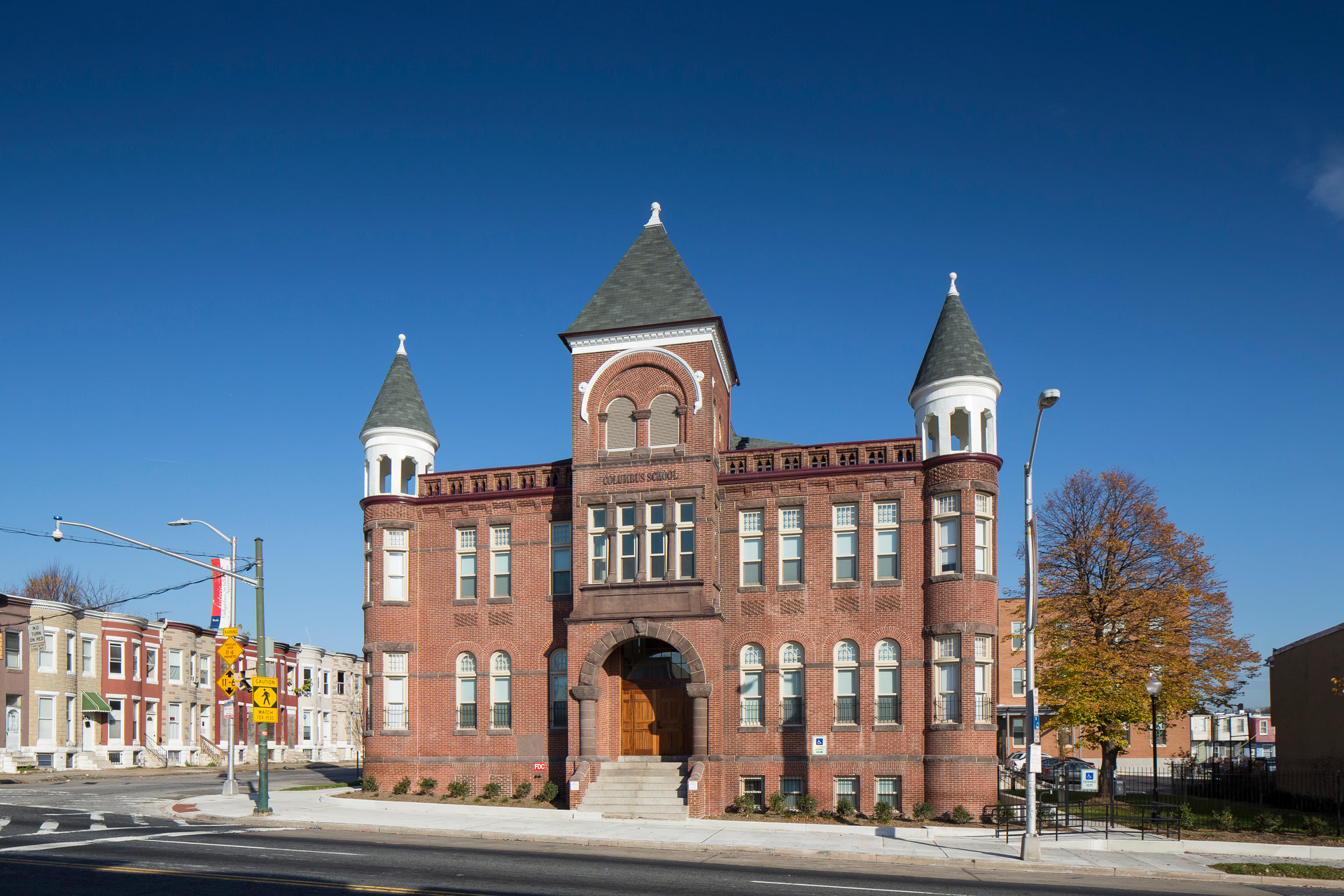
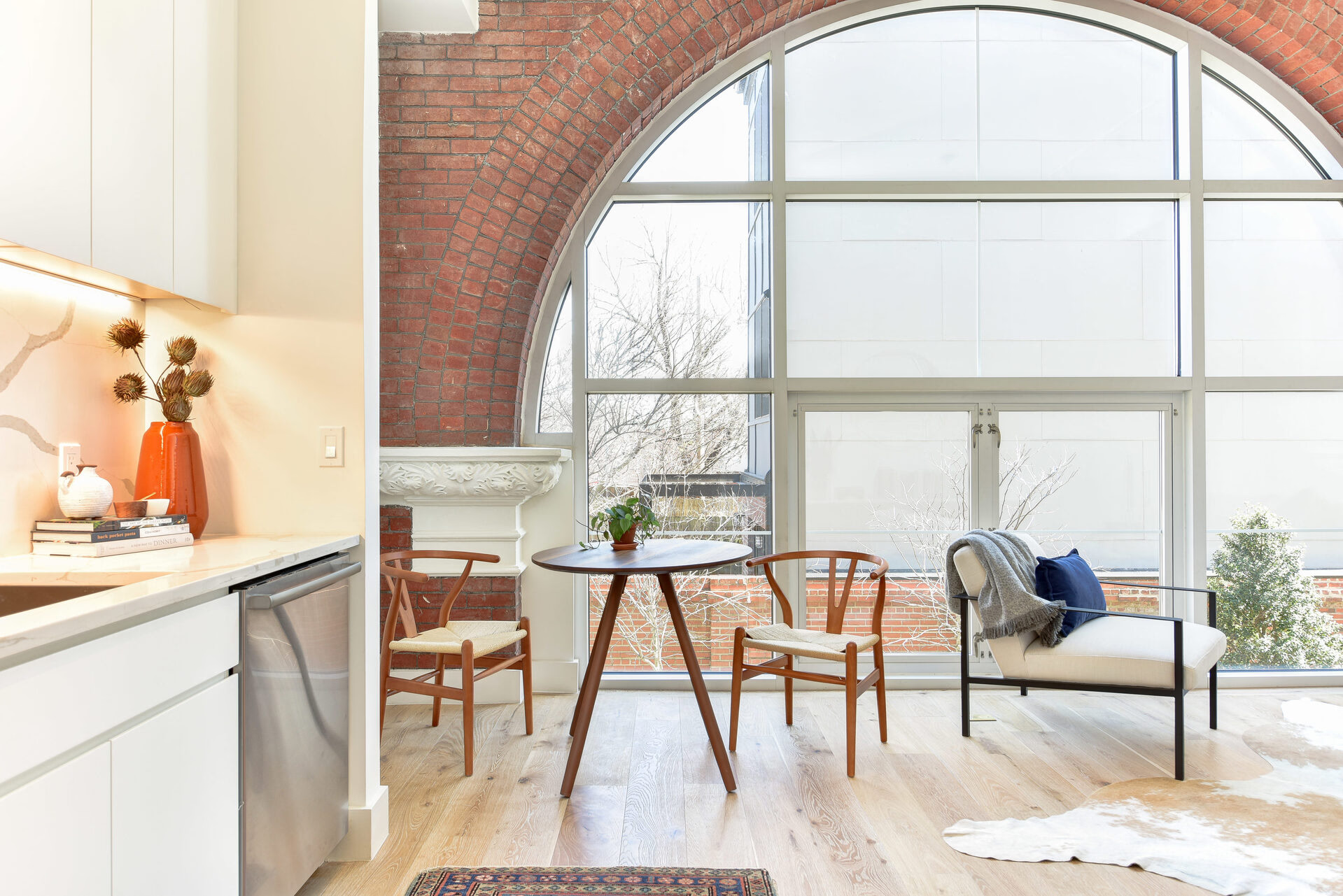
As adaptive reuse projects go, historic schools are fairly easy to convert to market-rate multifamily housing. The Mills standard classroom size of around 700 sf is perfect for a one-bedroom apartment, precluding the need for drastic structural changes. Schools’ high ceilings, large windows, and original details create character-filled living spaces with a unique charm and craftsmanship that would be very expensive to replicate in new construction.
We served as the historic preservation architect for the redevelopment of the Buchanan School (1895 and 1922) as condominiums; we also designed an infill addition connecting its two buildings. Each of the school’s 41 units is unique, with one- to three-bedroom condos ranging from 615 to 1,350 sf.
Schools to Affordable Housing
Because they tend to be located in established neighborhoods close to transit and businesses, historic schools make for excellent affordable housing. However, it can be challenging to fit in the required number of units to make an affordable housing project viable; this usually requires removing interior load-bearing classroom walls. We compensate for structural changes and reduce construction costs by limiting the number of unit designs and repeating the same unit vertically across floors.
An additional hurdle is mediating competing requirements from different funding agencies. For example, for one of our projects that was pursuing both LIHTCs and HTCs, the housing authority mandated that units be fully carpeted, while the state historic preservation office (SHPO) guidelines stated we should retain and refinish the original wood floors. We negotiated a compromise between the agencies by suggesting a luxury vinyl plank, which kept the wood-floor look but would be easier to maintain.
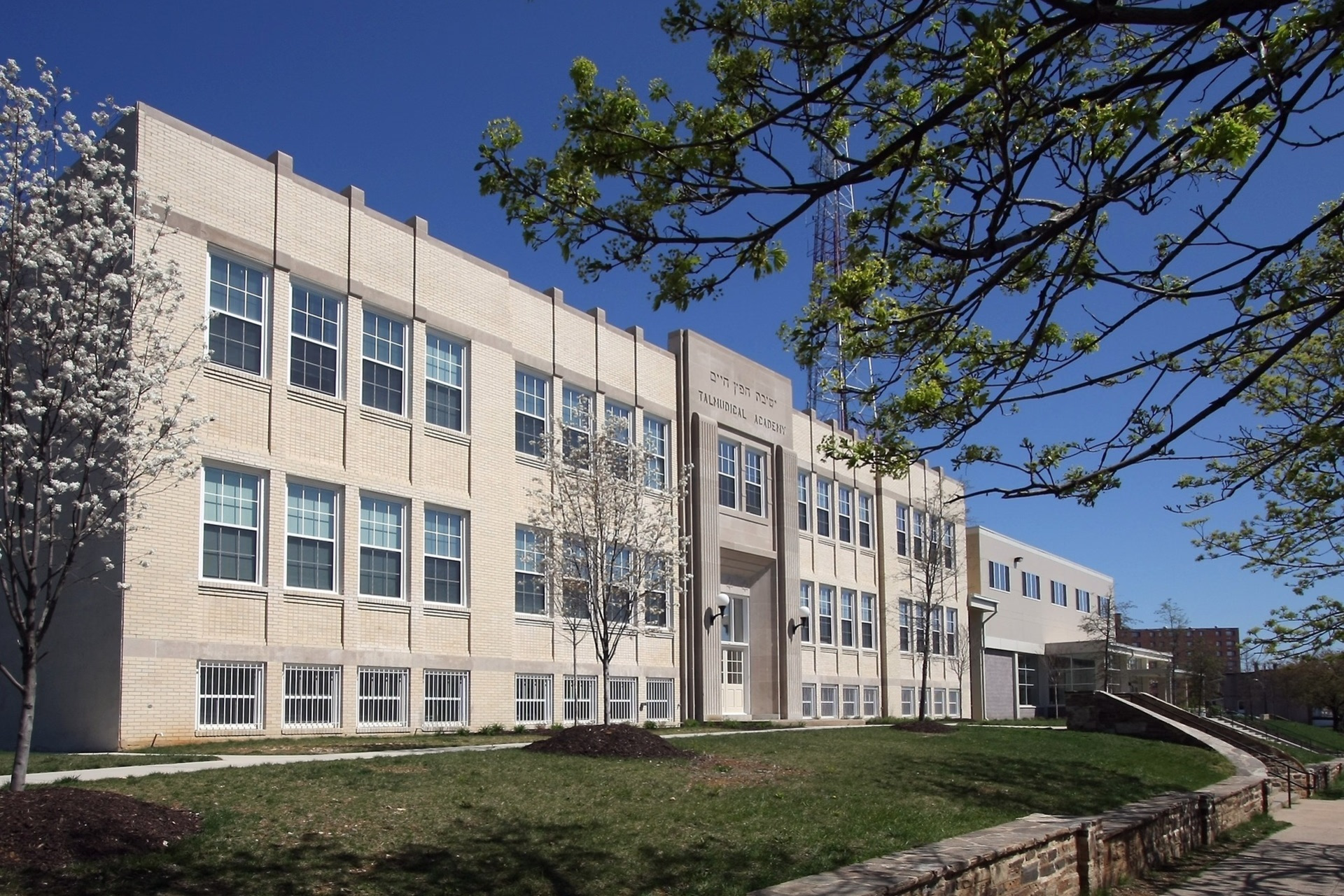
We converted Baltimore’s historic Talmudical Academy (1937) to Restoration Gardens, which provides 43 units of supportive housing to at-risk and formerly unhoused youth. The project received both HTCs and the 4% LIHTC, as well as a Historic Preservation Award from Baltimore Heritage. It has also stimulated reinvestment in its Park Circle neighborhood.
Schools to Senior Housing
Historic schools are especially well suited for senior housing. Their wide hallways are easy for people using wheelchairs or other mobility aids to navigate, and former gyms or cafeterias provide large spaces for socializing. For seniors who used to live nearby and maybe even attended the school, school-to-housing conversions allow them to continue living in their neighborhood and maintain their existing social connections.
At The Gateway, formerly Fremont High School (1926), we created 38 units of senior housing. We undid several layers of past renovation that had compromised the building’s historic character, including re-opening windows that had been filled in and removing dropped ceilings to restore ceiling heights. Like many historic schools, the Gateway is located on Fremont’s main street; residents can walk to the town library and central business district.
Schools to Mixed Use
Some historic schools are candidates for redevelopment as mixed-use buildings—buildings that house more than one occupancy type, often with housing as the primary component and one or more smaller spaces for retail, restaurant, office, or even library tenants. The key to a secure and successful mixed-use building involving housing is a clear separation of uses—people shopping in a retail space must not be able to access resident areas. When evaluating a historic school’s potential for mixed-use, look for additions that are still in good shape; they tend to have minimal connection points to the main building.
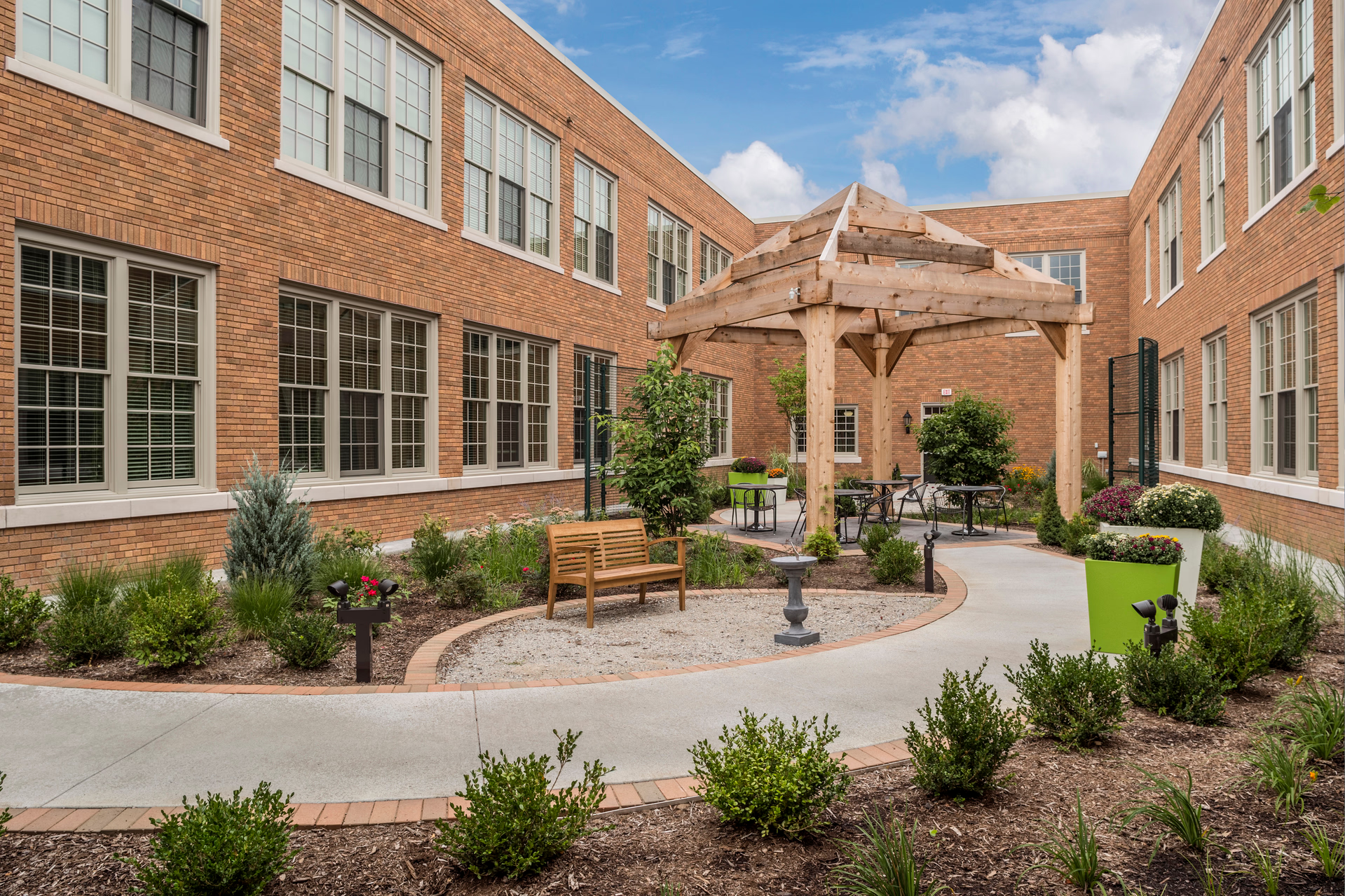
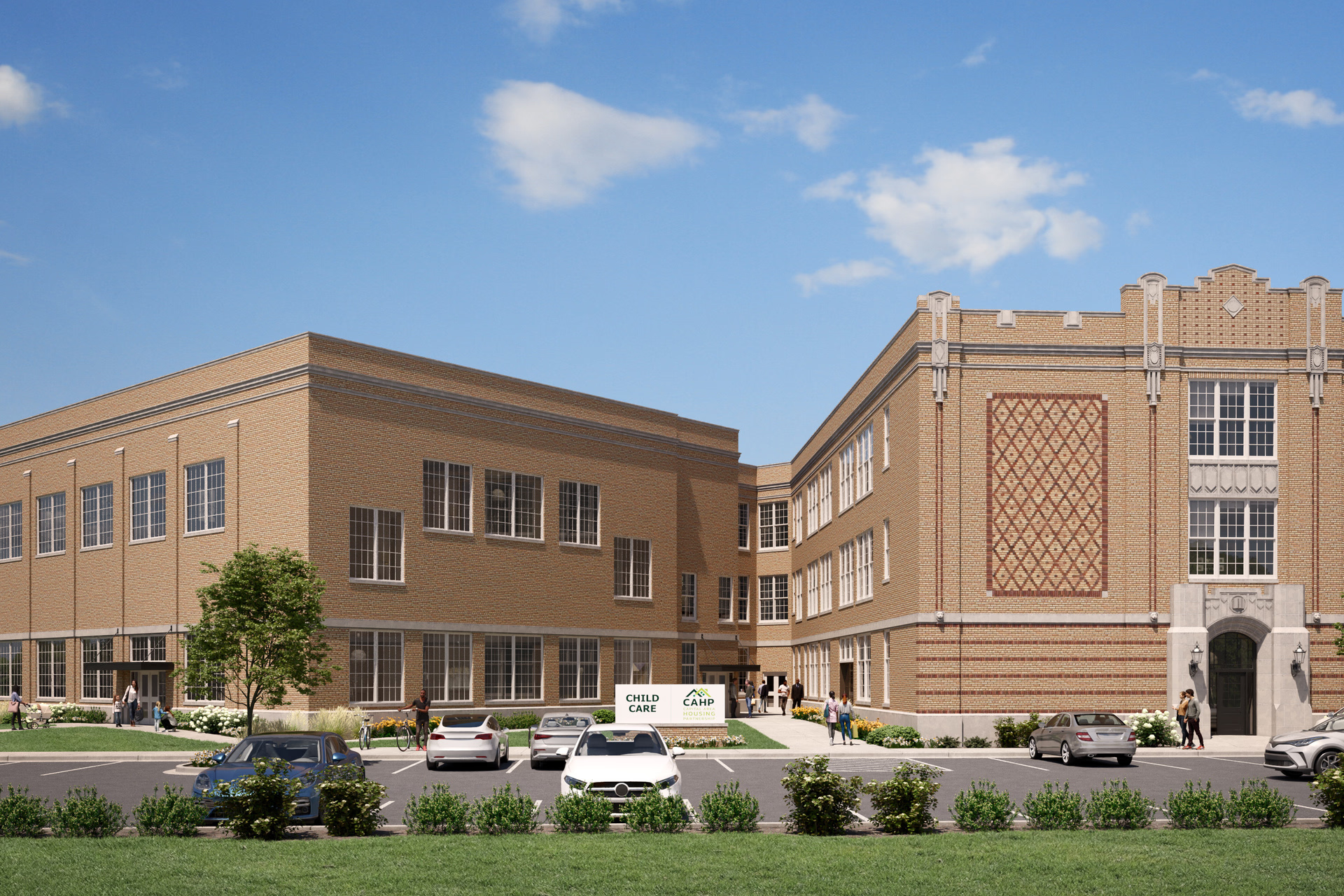
Walter French, the redeveloped Walter H. French Junior High School (1925), shows this approach in practice. The original building, which consists mainly of classrooms, has become the Residences at Walter French; a later addition, originally a pool and locker rooms with a gym above, now houses a daycare on the ground floor and offices on the upper level.
Smart Growth Through Adaptive Reuse
Vacant historic schools represent both a challenge and an opportunity. While they may no longer meet the needs of modern education, they can continue to serve their communities in new ways. With creativity, careful planning, and the help of an experienced architectural team, century-old school buildings can be transformed into homes that will last another hundred years.
Revitalizing a historic school isn’t an act of nostalgia; it’s a sustainable approach to community development. By reimagining these structures, communities preserve meaningful places while meeting current needs.