Historic school buildings are often among the most charming and beautifully crafted structures in our communities; they enrich the character of our neighborhoods, connecting us to history and place. Built with durable materials and attention to detail, schools from the late 19th and early 20th centuries are generally very solid, even if they’ve been vacant for some time. Renewing them—either so they can continue to function as schools, or by converting them to new uses—fosters the identity and sustainability of our communities.
This is the first installment in a two-part blog post exploring each of these paths. With thoughtful upgrades to support modern pedagogy, historic schools can continue serving students for decades to come. Alternatively, as my colleague Lauren Parker will show in the second installment, they can be adapted to serve a different community need.
With our experience in both the renovation and adaptive reuse of historic schools, we can help their owners explore the best use of these structures, as we’ve done for Dearborn Public Schools. Whatever path owners choose, one thing is clear: historic school buildings are valuable community assets that should continue to be used.
Community Mirrors
Public education is one of the central tasks of a democratic society, and the buildings that house this important task not only shape the way we teach, but provide icons and symbols for the values we hold common as a society.
LINDSAY BAKER, “A HISTORY OF SCHOOL DESIGN”
The historic schools standing today were built during a time of rapid population growth and social change, and since then their trajectories have mirrored the fortunes of their communities.
Beginning in the late 1800s, new laws required children to attend school and allowed municipalities to levy taxes to fund public education, which created a surge of school construction. Architect Wilbur T. Mills published an ideal classroom design that was adopted as a standard by many school districts: an approximately 20-by-30-foot room with large windows for daylighting.
After World War II, another surge in students arrived with the baby boom, and many districts added new wings to their existing schools. These additions often included gyms or cafeterias that the original buildings lacked. However, they were typically built using cheaper materials and less durable construction methods. To further save money, districts frequently built infill additions—sections tucked between existing wings—to reduce the number of new exterior walls.
In the 1960s and 1970s, the energy crisis led to further changes. Many schools saw their large original windows covered or filled in, and dropped ceilings were installed to hide new ductwork. These solutions reduced energy use, but also made for darker learning spaces.
Today, school districts face more localized challenges. Due to population shifts, some schools are overcrowded while others stand nearly empty. Cities across the country are closing underutilized school buildings; some, such as Detroit, have even begun selling vacant schools for redevelopment. In contrast, Washington, DC, has experienced a population influx since the early 2000s; over the past two decades, its public school system has undertaken an ambitious effort to modernize and expand its entire portfolio of almost 120 schools—many of which are historic.
We’re at an inflection point for historic schools. Districts are reevaluating their building inventories and deciding whether they should reinvest in aging facilities. When a historic school hasn’t been renovated in a long time—or has never received a comprehensive renovation—it can be difficult to imagine it as a cutting-edge learning environment. However, our portfolio proves it can be done.
Opportunities Abound
Teaching and learning are very different today than they were a century ago; in addition to lectures, contemporary pedagogy focuses on small group learning and less structured instruction. 21st-century learning environments must support this pedagogy with flexible spaces that can accommodate a variety of activities.
Luckily, with their large windows and durable materials, historic schools were originally designed with features we value in school buildings today. Once later interventions like dropped ceilings and poorly planned additions are removed, they can be easier to adapt for modern learning than schools 50 years younger. Here are some of the common challenges we face in renovating historic schools—and how we solve them.
EXPANSION
School program requirements have changed dramatically over the last century. For example, early childhood classrooms today have ensuite restrooms and generous storage space that make them much larger than the 20-by-30 foot historic standard. Many historic schools lack gyms or cafeterias, which were eventually added with poorer-quality additions; or they have one space that serves both functions, which no longer works for today’s physical education curricula.
As a result, expansion may be necessary. Our first priority is to reuse any unfinished or underutilized space inside the historic footprint. If that isn’t enough, we can design additions. This requires careful thought: how should a new extension relate to the old building? The goal isn’t to copy the historic style, but to design an addition that feels appropriate in scale, massing, and materiality. The challenge for architects working in historic contexts is to create something that is self-evidently “of its time” while at once conveying a sense that it belongs in the midst of its historic neighbors.
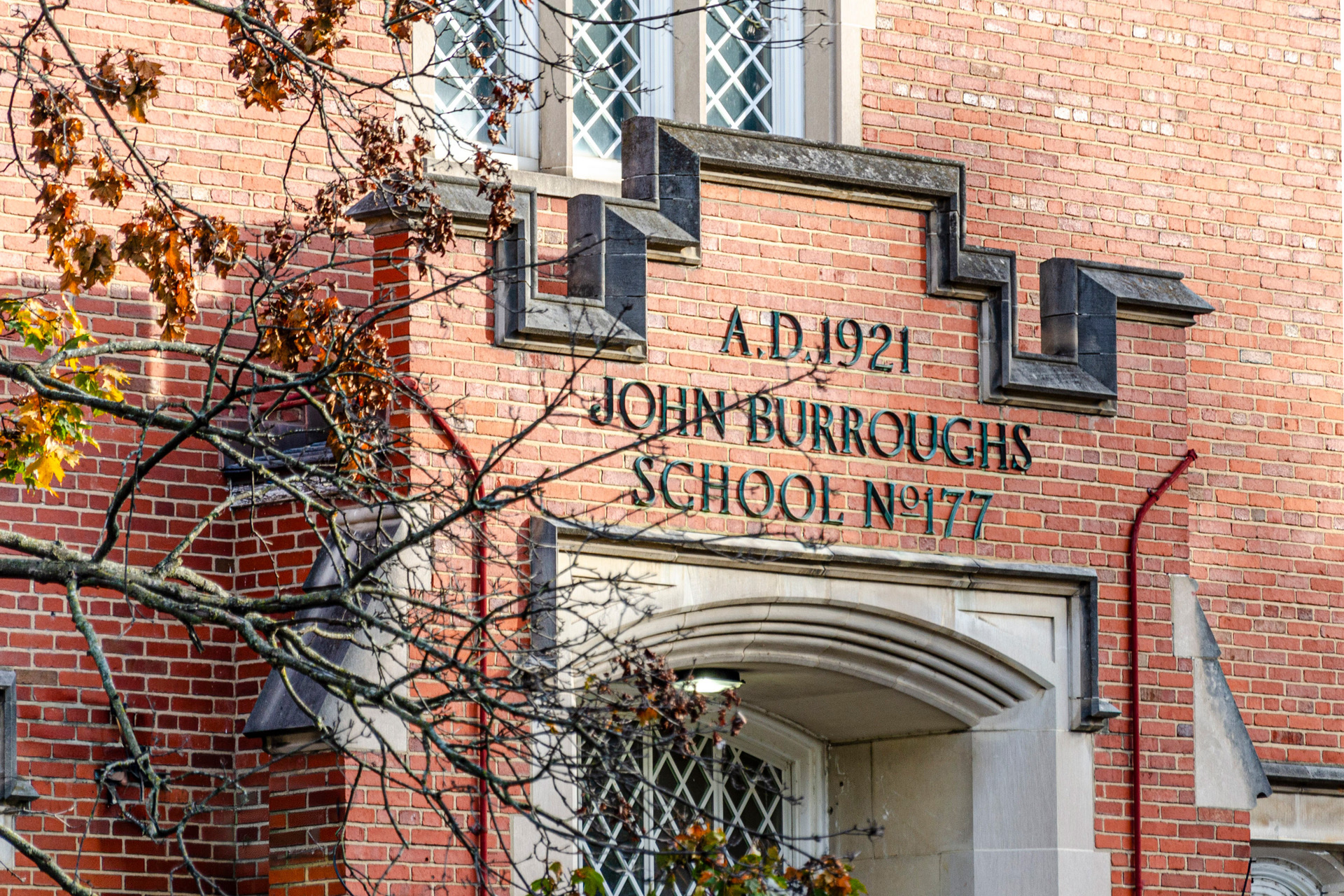
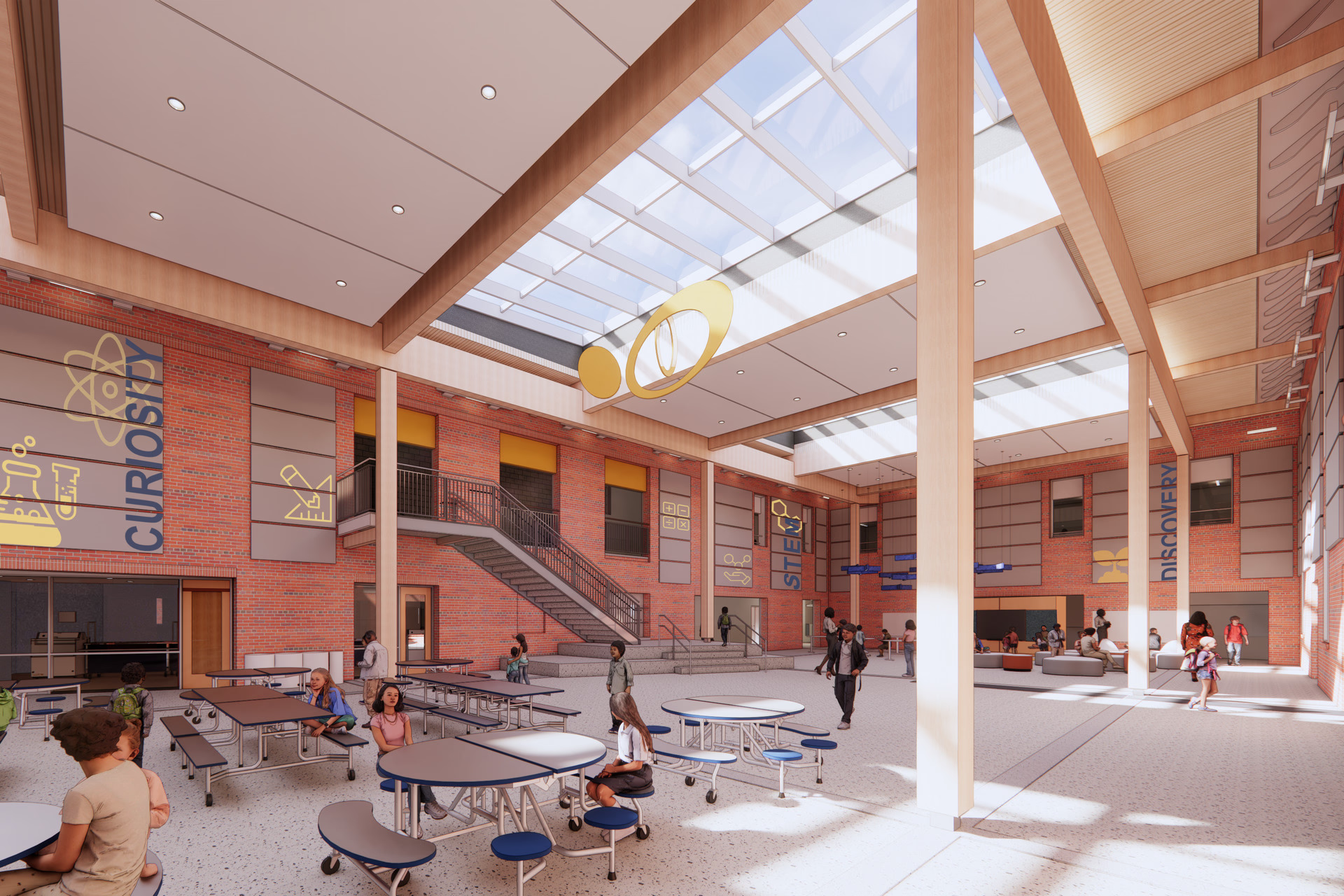
We’re using all of these expansion strategies at Burroughs Elementary School (1921): reclaiming partially excavated basement space, creating mechanical spaces in attics, infilling an underutilized courtyard to create a skylit multipurpose atrium, and replacing a mid-century addition to house pre-K and kindergarten classrooms.
DOWNSIZING
Some schools face the opposite issue: instead of needing more space, they have too much of it. In some areas, population decline has left historic schools partially empty. In these cases, selectively removing parts of the building can reduce operational costs while preserving high-character historic sections. Downsizing can make a school more efficient and sustainable without sacrificing its identity.
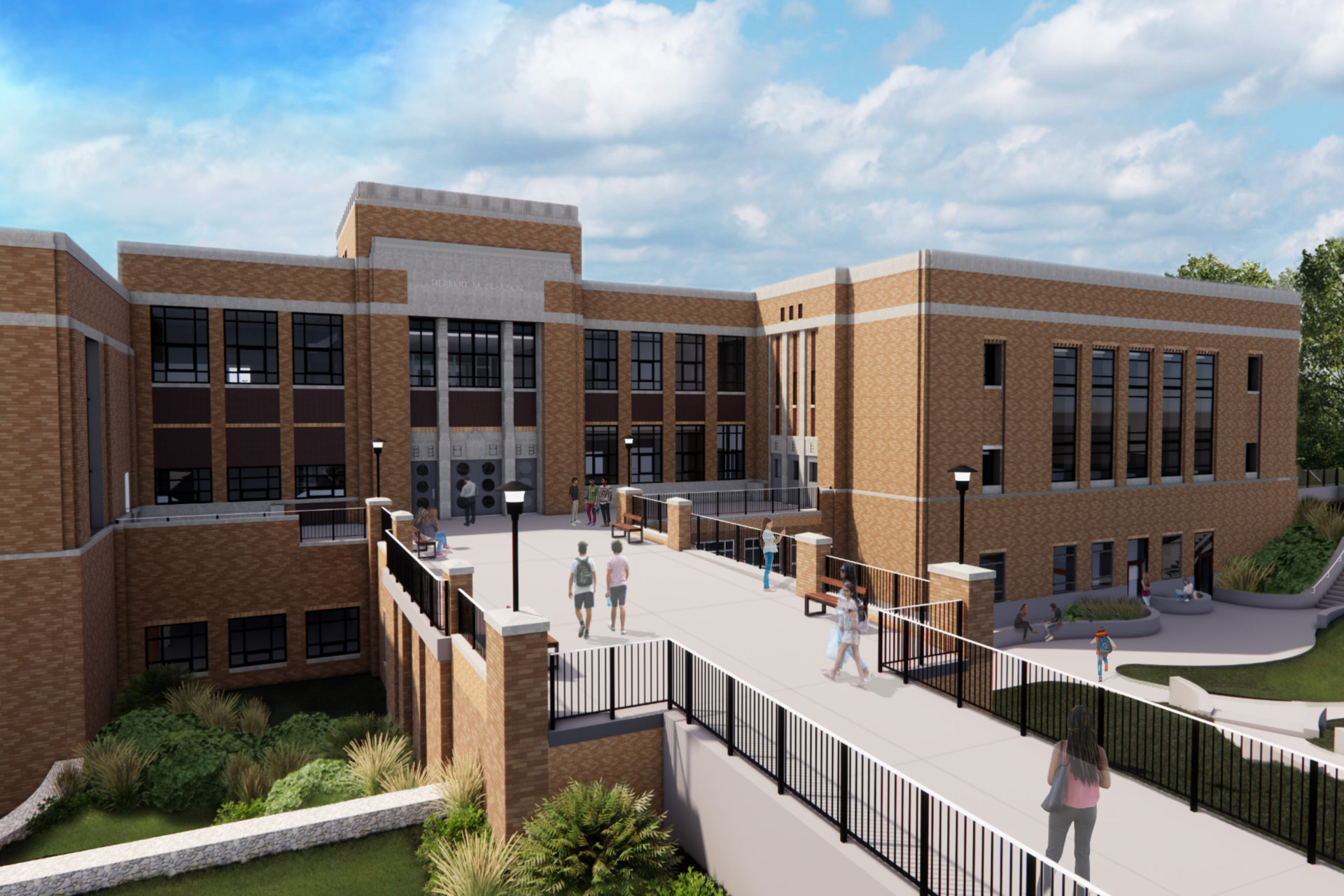
Ann Arbor’s Slauson Middle School (1937) was oversized for its student population. As part of our comprehensive renovation, we’re removing some later additions that had “landlocked" several classrooms, preventing natural light from reaching them. The removal restores the original façade and creates room for outdoor classroom spaces and additional parking on a tight site.
DAYLIGHTING
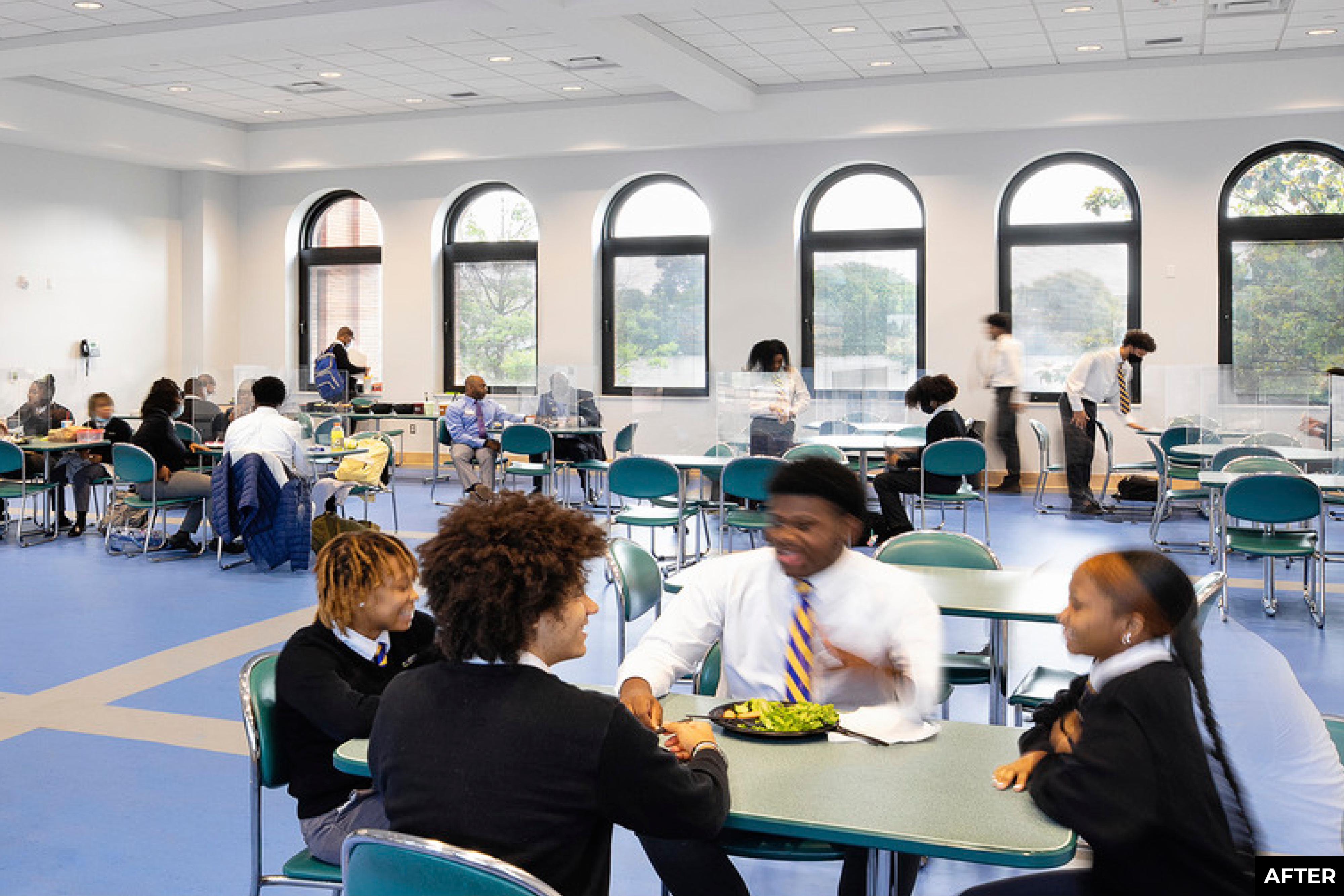
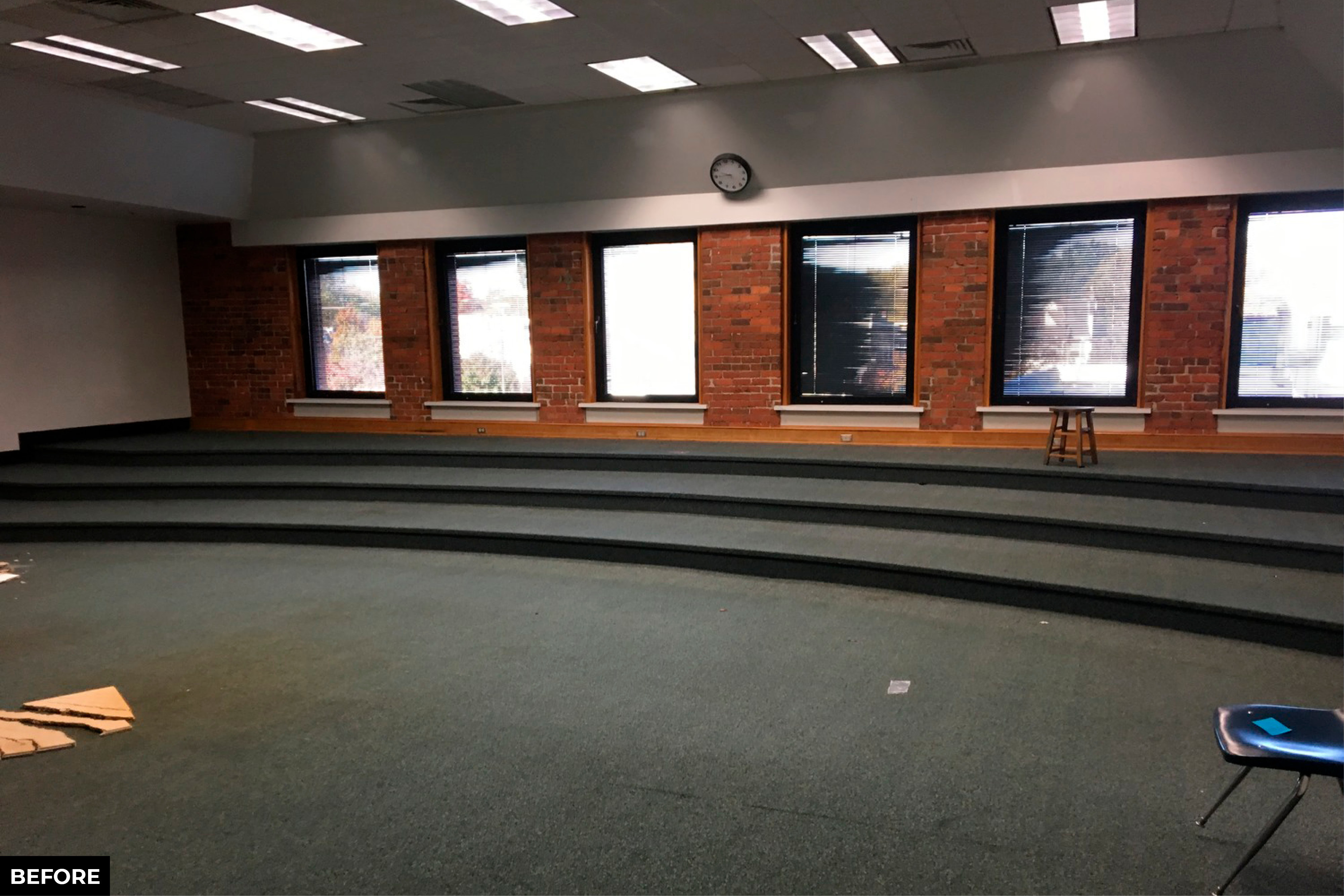
Like Slauson Middle School, many historic schools lost daylight when infill additions obstructed their windows or when windows were blocked in during the energy crisis. Dropped ceilings reduce the height of rooms, which, as we know from our research into circadian daylighting, prevents daylight from reaching far into the space. By restoring original fenestration and ceiling heights, renovations can bring natural light deep into classrooms—improving both the learning environment and energy efficiency.
We’ve been renewing Cristo Rey Richmond High School (the former Benedictine High School, 1900) in phases to allow the school to remain open to students throughout construction. We’ve removed dropped ceilings and restored original window heights, making the school brighter and healthier as well as bringing back its original character.
image_compare
ACCESSIBILITY
Historic schools were built long before modern accessibility standards, which date to 1990 with the passage of the Americans with Disabilities Act (ADA). We believe in going beyond ADA requirements to achieve truly inclusive buildings. New ramps, elevators, and accessible routes can be added in ways that complement the building’s character. These improvements make the school welcoming and accommodating for all students, staff, and visitors.
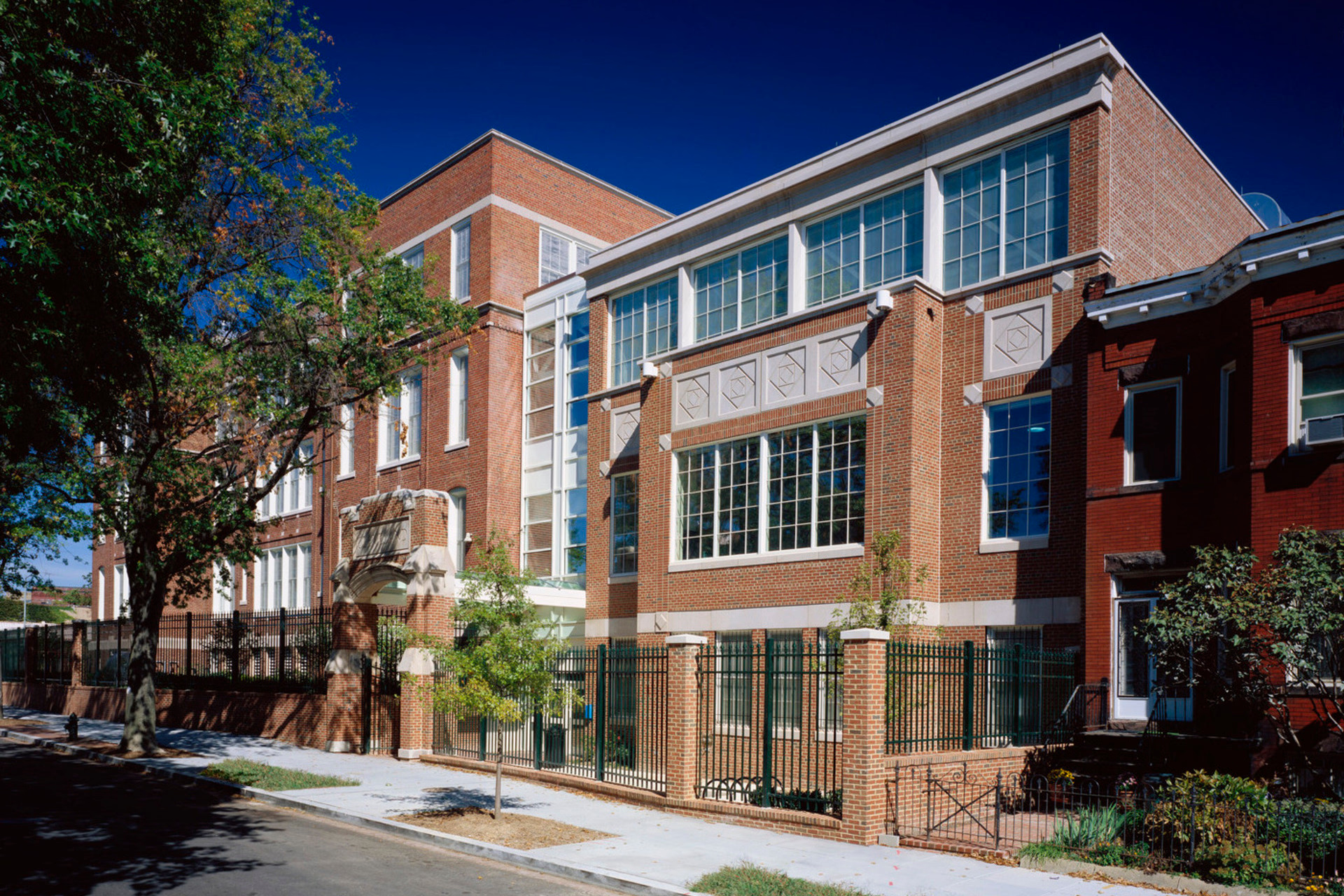
At Cleveland Elementary School (1911), we solved accessibility issues by moving the main entrance to a new addition between the historic building and adjacent rowhouses. The addition, marked by a freestanding gateway, creates an on-grade main entrance and provides a cafeteria, gym, and elevator.
SECURITY
School security standards are ever-evolving. Strategies run the gamut from passive site elements that discourage unwanted behaviors to high-tech electronic systems. The challenge is integrating these measures without making the building feel like a fortress; students should feel safe but not confined or constantly watched. Thoughtful design blends security features into the building in subtle, student friendly ways.
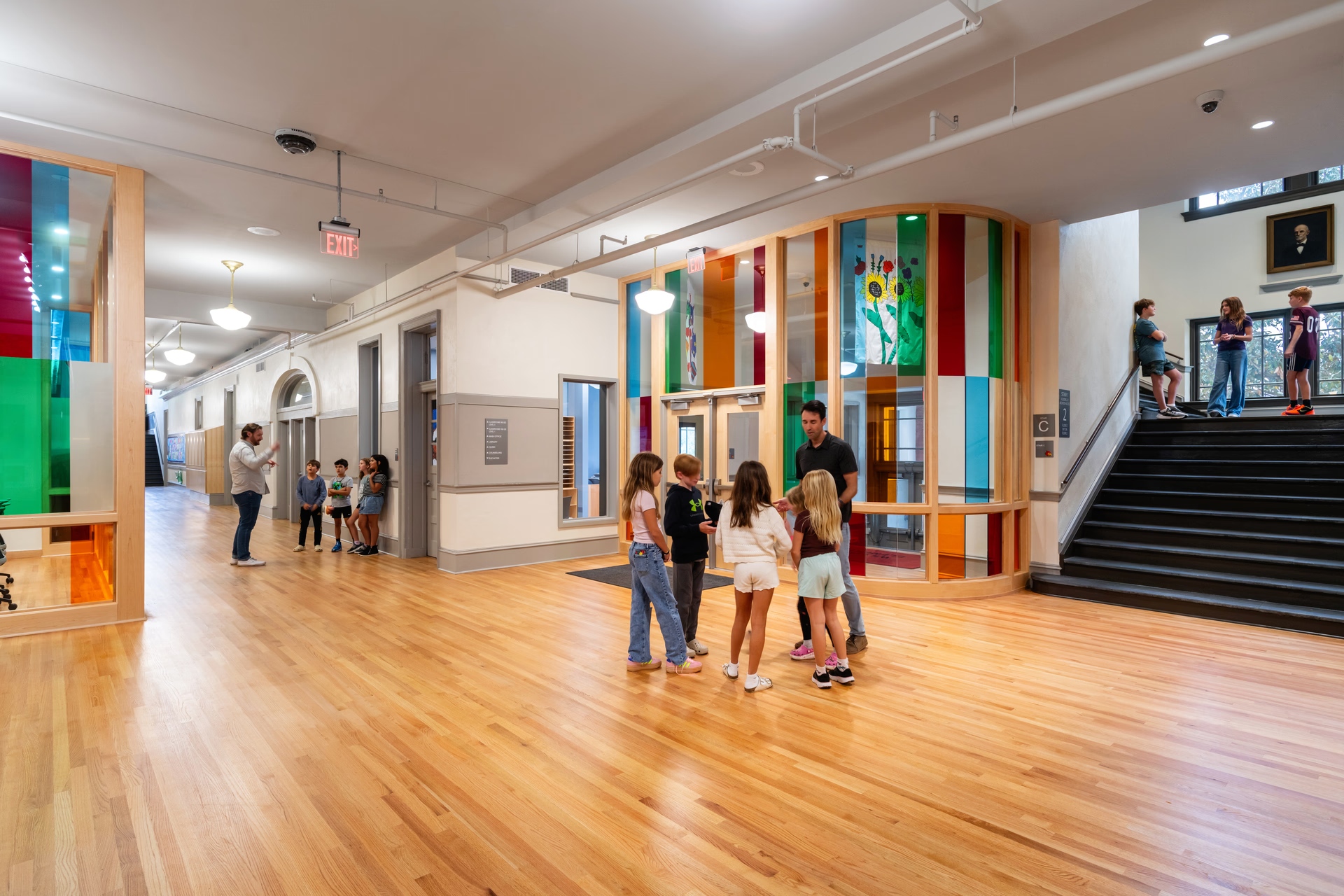
When we rebuilt Fox Elementary School (1911) after a fire, we added a new security vestibule at the entrance that diverts visitors through the front office. Colorful panels and a playful curve make it a fun and welcoming feature.
Honoring the Past, Supporting the Future
Renovating historic schools involves balancing school districts’ educational specifications with historic preservation review agency requirements. We’re skilled at navigating these competing mandates; in fact, we find that the tension inspires creative and innovative solutions.
By listening closely to our clients, the school’s students, and the building itself, we craft renovations that honor the past while supporting the future. Historic schools are valuable not just for their architectural charm or embodied carbon, but because they hold the stories of the communities they serve—and with thoughtful renovation, they can continue shaping those communities for generations to come.