THIS POST ORIGINALLY APPEARED AS AN ARTICLE IN THE AUGUST 2026 ISSUE OF PAPYRUS, THE MAGAZINE OF THE INTERNATIONAL ASSOCIATION OF MUSEUM FACILITY ADMINISTRATORS.
It’s a time of disruption for museums, with funding challenges forcing many institutions to reduce their facilities staff and postpone capital projects. While the immediate impacts of these decisions are felt keenly, the longer-term risk is less obvious but just as consequential: the loss of institutional knowledge.
Arguably even more than in other museum departments, institutional knowledge regarding facilities is crucial. Understanding how the building was designed, modified, maintained, and operated over the decades—or even centuries—directly affects a museum’s ability to steward its collections responsibly. When staff transitions take place without a structured transfer of knowledge, critical context is lost, making later building projects more difficult, more costly, and more likely to disrupt historic fabric.
Long-term partnerships with architecture, engineering, and construction (AEC) firms can play a vital role in bridging knowledge gaps. Beyond executing individual projects, AEC teams can serve as repositories of institutional knowledge. Even more importantly, AECs can help museums build the internal systems and practices needed to retain that knowledge long into the future.
AEC Firms as Knowledge Keepers
AEC firms that maintain long-standing relationships with museums often become informal custodians of institutional memory. Over years or decades of collaboration, they accumulate deep knowledge of the facility’s evolution, which can become invaluable when the museum’s internal capacity is stretched.
Documentation
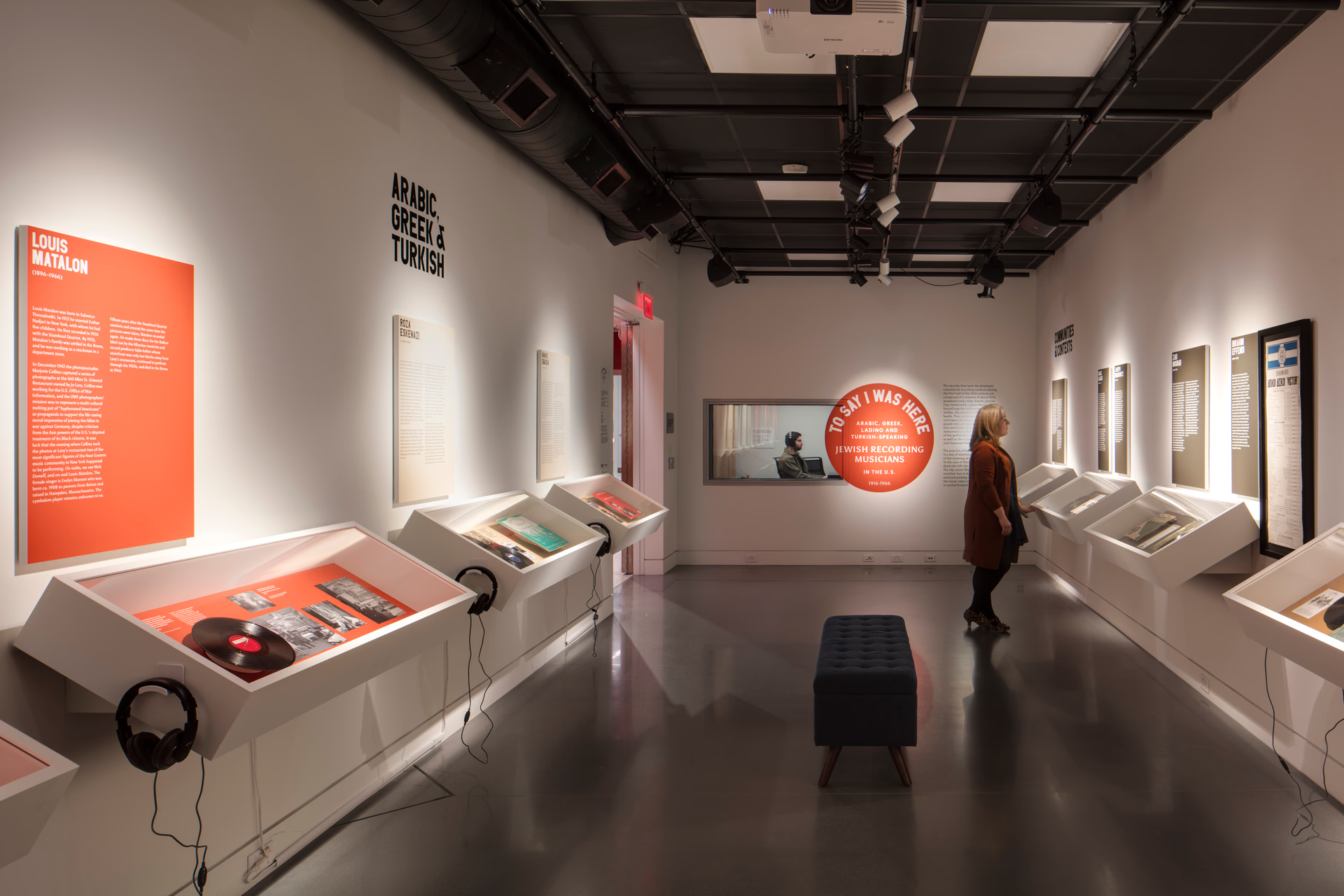
One of the most tangible ways AEC firms support museums is by serving as a repository of project documentation and contextual information. An architect or engineer who worked on a project 15 or 20 years ago can often explain the original design intent: why a space was laid out the way it was, what constraints drove certain choices, and which alternatives were considered and rejected. This insight can be especially important when museum leadership has changed, and no one on staff remembers the rationale behind design decisions.
AEC firms’ documentation often extends beyond their own projects. As part of the research and design process, they gather older drawings, studies, and reports. When documentation is missing or unreliable, AEC teams may create new as-built drawings to capture existing conditions—filling gaps left by undocumented work.
Processes
Long-term AEC partners develop a strong understanding of their clients’ internal processes and stakeholders. They know how projects get approved, where bottlenecks tend to occur, and which building issues have been persistent pain points. This familiarity creates efficiencies: solutions for known deficiencies can be integrated proactively rather than rediscovered each time, and specialty stakeholder groups—such as curatorial, conservation, security, and installation—do not have to re-explain their needs for every project. Over time, trust builds, and that trust supports smoother project delivery.
Developing an In-House Knowledge Base
While external partners are valuable, museums benefit most when they also invest in building their own internal knowledge systems. Because things happen: AEC firms close their doors, or a new director wants to hire the team they worked with at a previous institution. Even modest steps can significantly reduce the risk of losing important information along with a go-to AEC partner.
Guidelines
One foundational practice is developing design and documentation guidelines. These do not need to be elaborate; even a collection of organized notes can make a difference. Documenting modeling standards, preferred materials, and equipment choices helps a new team design to the institution’s needs.
Organization
Equally important are clear processes for storing and organizing project documentation. At a minimum, museums should ensure that all drawings, specifications, studies, and closeout materials from new projects are retained in a consistent, accessible location.
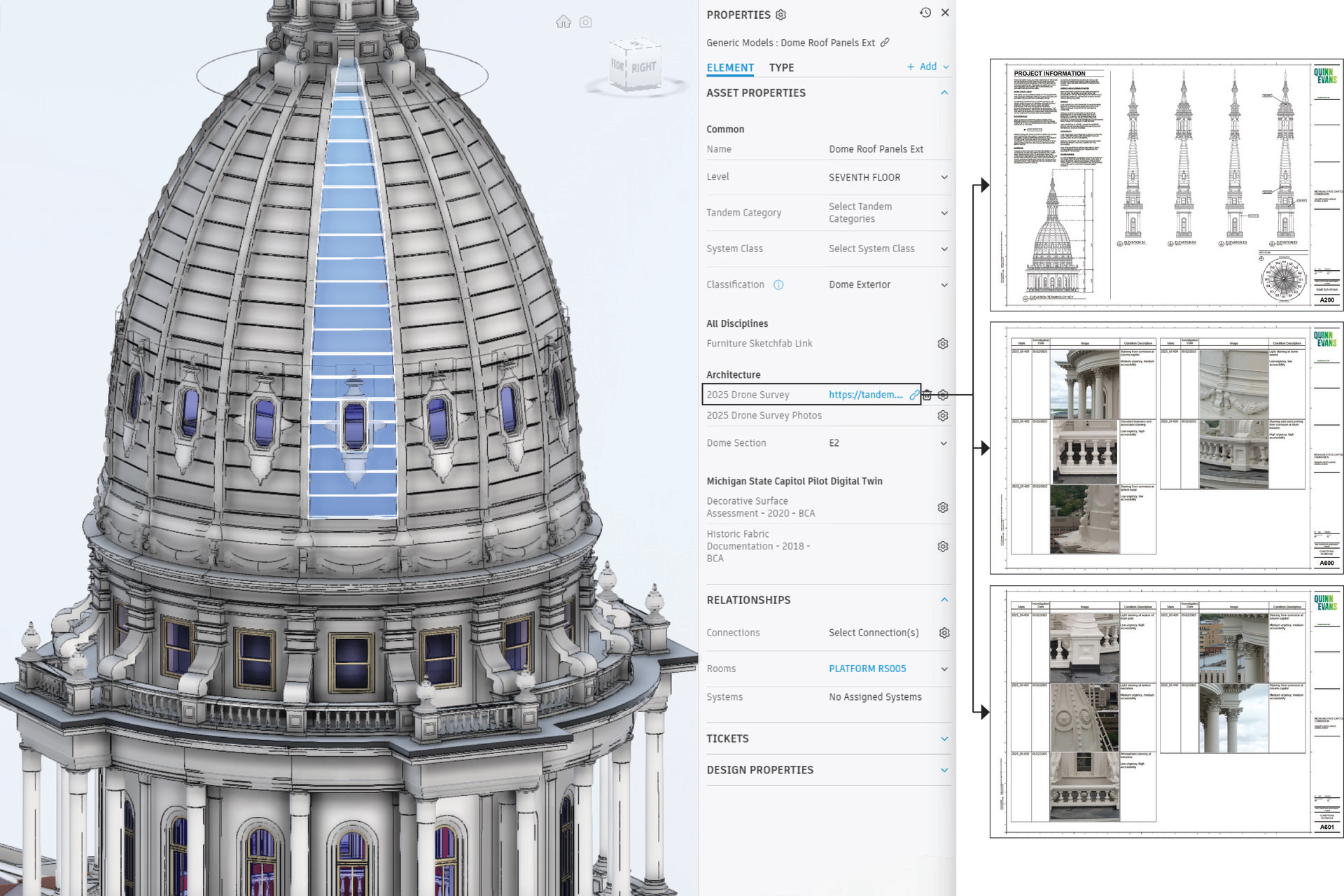
Recovering and organizing older project documentation is often more challenging but no less critical. The absence of reliable records can lengthen project timelines because previous efforts—like engineering studies or paint analysis—must be duplicated. We’ve even had museum clients ask us for old plans they themselves provided because they can no longer find them. Proactively collecting plans from past projects and descriptions of self-performed work can help prevent similar losses. Digital twins, which my colleague Charles Thompson wrote about in Papyrus’ December issue, are an excellent tool for managing building documentation of all kinds.
Planning
Finally, museums should consider developing a holistic plan—such as a facilities master plan—to guide future work. Even if funding arrives sporadically and implementation is incremental, a master plan provides a clear road map. This way, when unexpected opportunities arise, the institution is prepared with a prioritized list of potential projects—any one of which will further a coherent vision.
Building and Maintaining Effective Long-Term Partnerships
Long-term relationships between museums and AEC firms are most successful when they are intentional and actively managed. Choosing AEC partners based on qualifications and relevant experience sets the foundation; after that, ongoing communication is key.
Feedback
As with any relationship, periodic check-ins and feedback help ensure that the partnership continues to serve the museum’s needs. Strong AEC partners both welcome and actively solicit feedback on their performance. Some institutions formalize this process; for example, many federal clients must complete and file feedback forms at key project milestones. Independent museums can adopt this practice by establishing a consistent mechanism for evaluating consultants, which is helpful to the AEC partner in the short term and can also aid the museum in selecting firms for future projects.
Term Contracts
Term contracts, known in the federal sphere as Indefinite Delivery/Indefinite Quantity (IDIQ) contracts, can provide a museum with continuity and opportunities for reassessment at fixed intervals. As much as AEC firms dislike having to re-compete for work, the time-limited nature of the contract allows the client to “shop around” and reconfirm that their long-term partner is still the best choice for their needs.
Looking Back to Move Forward
In a time of financial uncertainty and staffing transitions, preserving institutional knowledge isn’t a luxury for museums—it’s a necessity. Facilities are among a museum’s most complex and valuable assets, and the cost of lost knowledge often far exceeds the cost of maintaining it.
By pairing standardized internal practices with strong AEC partnerships, museums can safeguard their institutional memory, reduce risk, and position themselves to respond nimbly when opportunities arise. In doing so, they not only protect their buildings and collections, but also strengthen their capacity to fulfill their mission well into the future.