In this interview, Quinn Evans’ Maya Fraser, AIA, and the University of Michigan’s Lauren Szczygiel, PhD, discuss their paper “Built for Belonging: A Nationwide Study on School Design and Adolescents’ Feelings of Social Connectedness” (additional co-authors are Andrew Ibrahim, MD, and Mitchell Mead, LEED AP BD+C, WELL AP, EDAC). Their conversation has been edited for length and clarity.
Why study belonging in schools?
MAYA FRASER
We're in the middle of an isolation crisis. People are lonely; there was a surgeon general's report about that. With so many competing things that kids are dealing with right now—coming out of the pandemic; the rise of social media; being sucked into your device—all of these things are contributing to a mental health crisis amongst kids. Schools are one of the main places that kids go—one of the main places where you could put a policy in place that could potentially help them.
Obviously, I'm an architect, so that's the lens I wanted to look through. But what was shocking to me was that there's so little research about the impact of school architecture on kids' social lives or how they feel about their school. That was why I was particularly interested in this topic. It's something we talk about all the time in our studios, we'll say, oh, this would be a great place for students to gather! Architects are thinking about these issues, but we don't actually have any evidence about how what we're designing affects kids. For something that’s such a huge investment—a school could cost $50 million!—we want to know that what we’re doing is working.
LAUREN SZCZYGIEL
I was intrigued by the idea because, while I currently work with surgeons in healthcare services research, my background and experience prior to this has been qualitative research, mostly with a kid population. My dissertation focused on girls’ access to sport and physical activity in Detroit and how the city's infrastructure affected that access. So when I was pitched being able to collaborate with Maya, I was excited about the idea to work with youth-generated insights again, because I think if we are going to propose interventions or do things that are supposed to affect children, then we should have their insights involved.
Teachers and administrators have a lot of insights, but we need to actually talk to kids to understand what they think of their schools, how they're engaging with things, to make sure that any interventions have them centered. So I was really excited to be able to come back into a bit more of my subject area expertise, as well as contribute to a project that I thought would be impactful and meaningful.
What did you expect the study to find?
LAUREN SZCZYGIEL
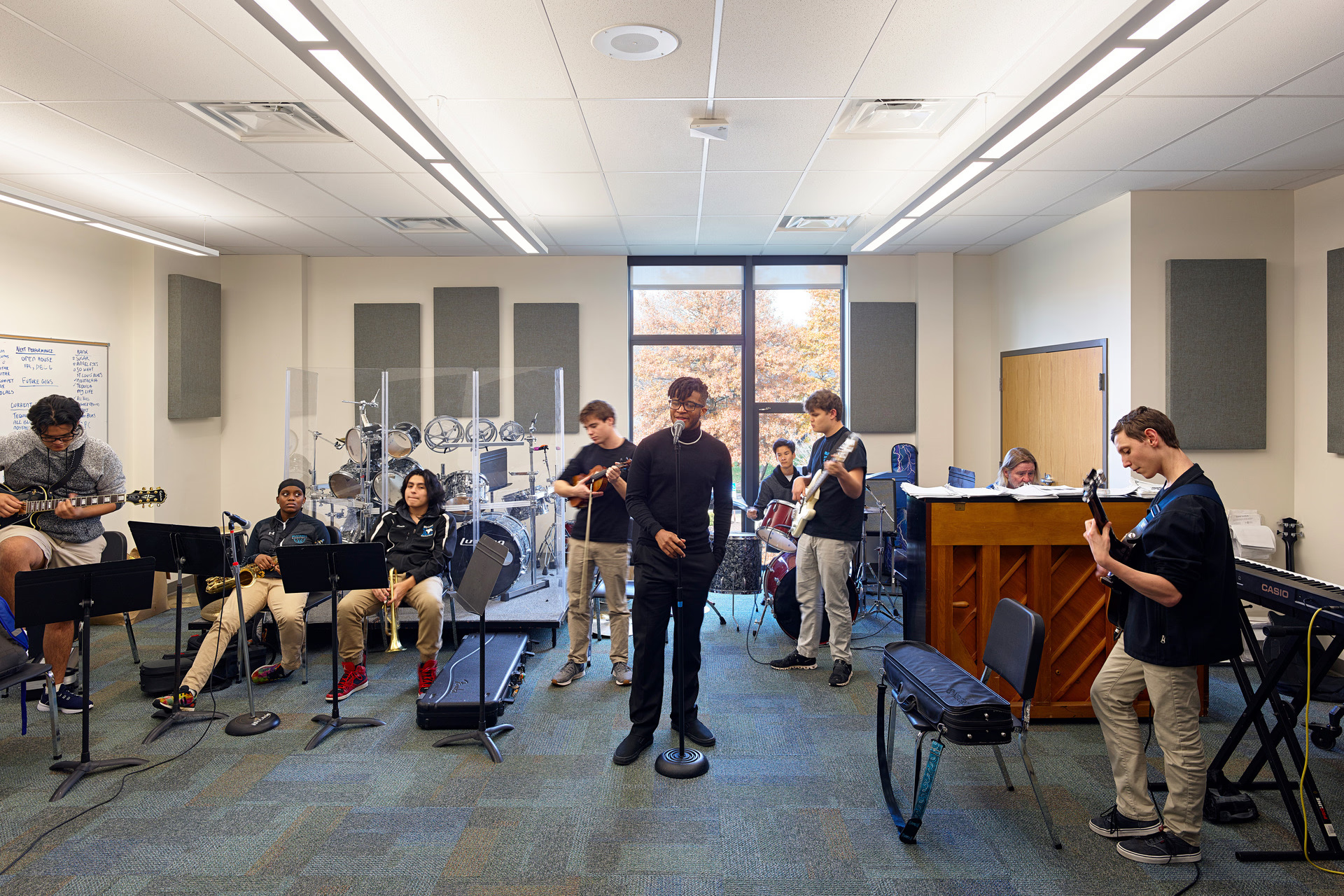
I came to this study with no training in architecture and design, so Maya taught me a lot about the impact of the built environment on students. And it makes sense; I'm from the Bahamas, so I grew up in an educational system that's completely different than what's experienced in the US. Our school buildings are very utilitarian; my schools were gray block buildings, there were no communal spaces. And then in talking to my husband about his experiences in school in the US—they had free periods where they could interact with each other, and spaces for things like band practice. It was like, of course design should matter for kids. Let's figure out how it matters for them.
What did you find that surprised you?
MAYA FRASER
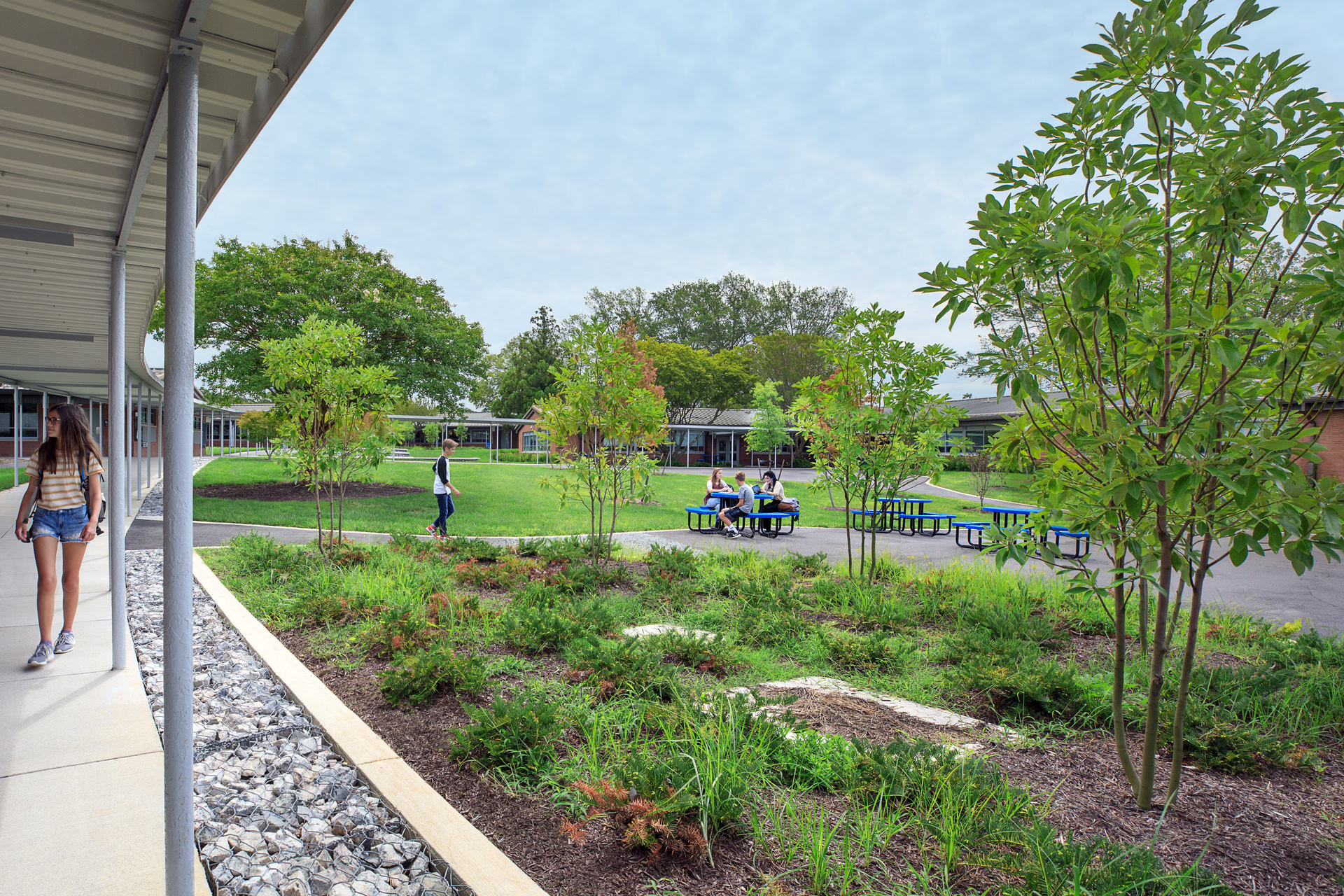
I expected to find a relationship between quality of space and belonging, but there are certain areas of the school that I didn't expect to have such a big impact. Like, I didn't expect kids to talk about outdoor spaces so much. I expected that things like windows would impact people's experience, but I didn’t expect that to be tied so closely to belonging.
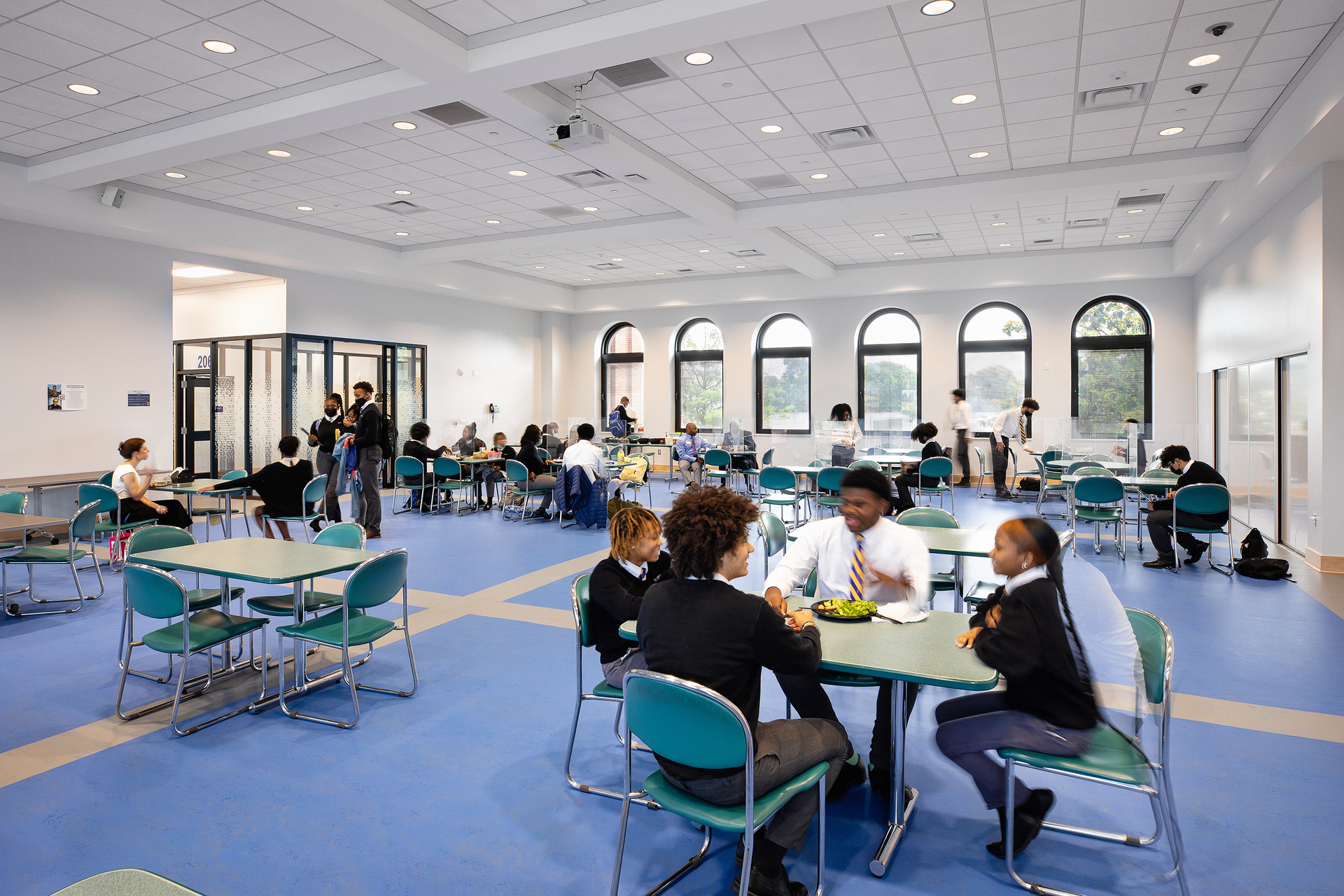
Another thing that surprised me was how overwhelming people found cafeterias to be. Looking back, it's not like I had a really well-designed cafeteria at my high school, but we were allowed to eat lunch outside because it wasn't big enough. And what we heard students saying was, we want more options for where we can sit. We want places that are quieter. We want places where it doesn't feel like the whole school is looking at me. And it turns out I had that flexibility at my school.
So those are some of the things that I was a little surprised by coming in—that and the strength of the respondents’ feelings.
LAUREN SZCZYGIEL
Yeah, we were both surprised by how much the students had to say. It was a text-based survey, so a lot of them were probably responding on their phones; you expect short, brief sentences. But there were students who had a lot to say—they were clearly very observant about the design of their school, including being very specific about things that they liked, things that they didn't like, things that they wanted to see improved. How much they wanted us to know, how much they wanted to contribute to the research, and how much they wanted to say—it was very exciting because it felt like we had hit on something that was important to them.
MAYA FRASER
I agree, we saw people maxing out the character limit—you would see their sentence just come to an end because they'd run out of space. It showed how much they wanted to communicate about this. Probably no one's ever asked them how they felt about their school before.
How do you hope schools and designers use your research?
MAYA FRASER
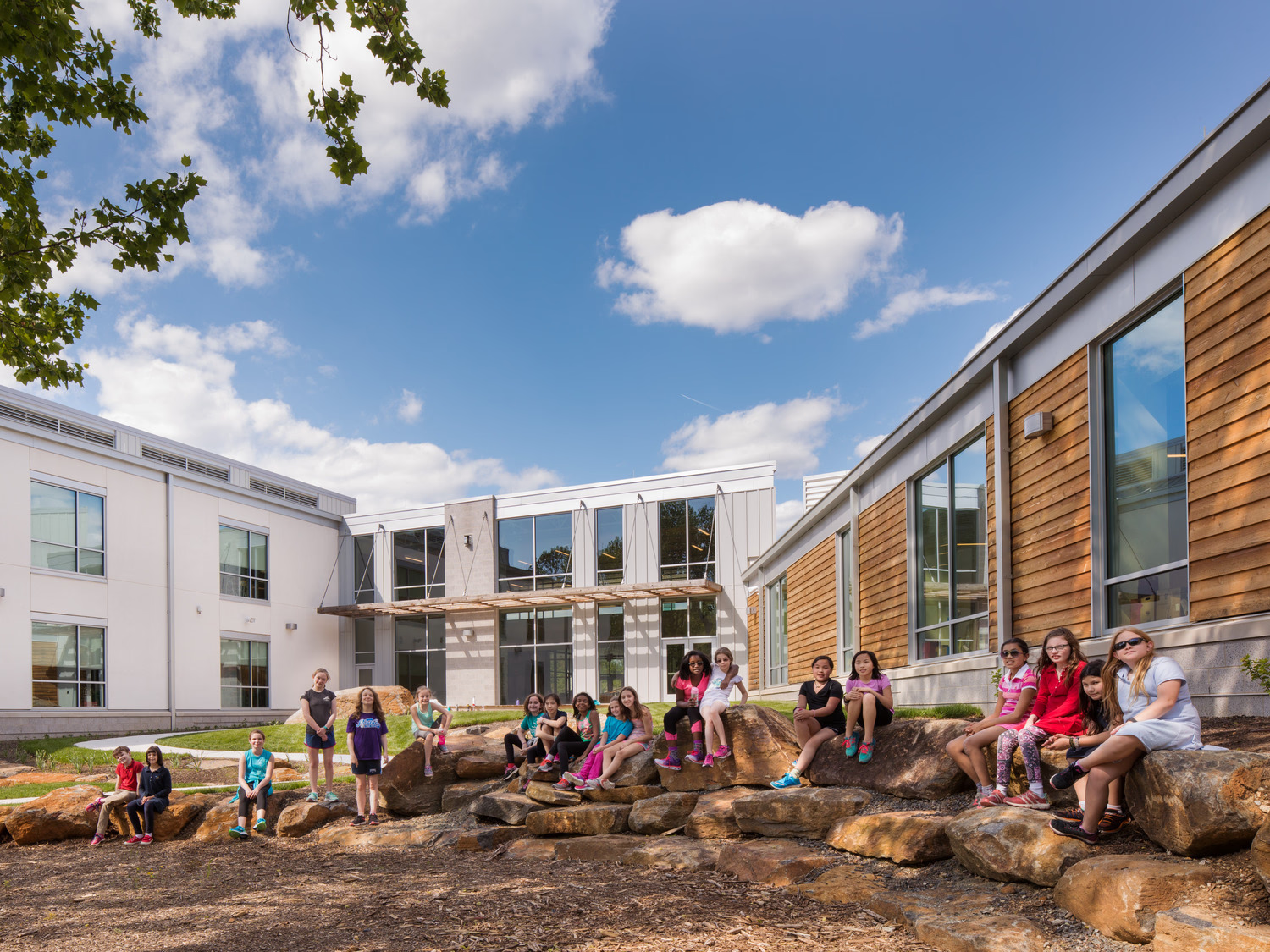
Well, it will surprise no one that windows and daylight are good for students, or that people want to be in nature. But the strength and the articulateness that they showed—I hope it provides evidence that these things should be prioritized. There are things that we often think of as frills, right? Like, windows are expensive, so it would be nice for the kids to have daylight, but they can do without. It turns out, no, this actually really changes your relationship with school.
An amazing follow-on research project would be if you were able to show outcomes. Things like windows probably translate into things like, how much do kids come to school? We're facing record levels of absenteeism in schools right now. If you want to make your school an environment that kids are excited to come to, where they're going to invest in their own learning, then some of these “frills” might be critical.
LAUREN SZCZYGIEL
I’ll say, I hope people more broadly can see the benefit of collaborative research. I think that we found a really good blend of people with different expertise. I mean, Maya, architecture and design; my work in qualitative research and kids; and even Andrew [Ibrahim], whose expertise is in healthcare design. We were able to come out of this with a product that is so much greater and better than any of us could have attempted individually. I think that these partnerships are really critical; I want people to see that collaborative research can be done, it can be done well, and it can be done to great effect and collect really good insights.
For more on belonging in schools, find a summary of Maya and Lauren’s research here, and a list of low-cost interventions that support belonging here.
For more of Quinn Evans’ primary research, read about and access our study on daylighting design for circadian health here.
.avif)