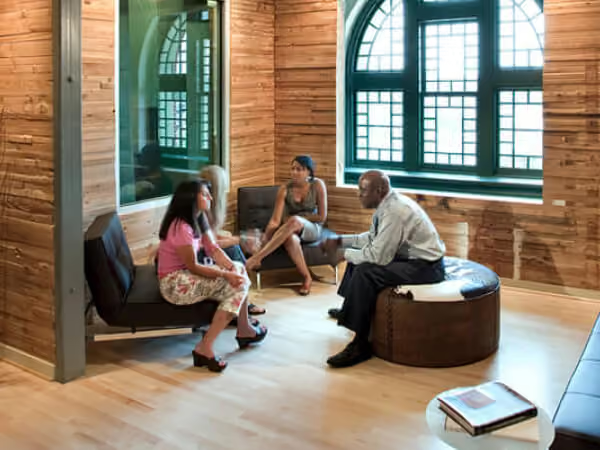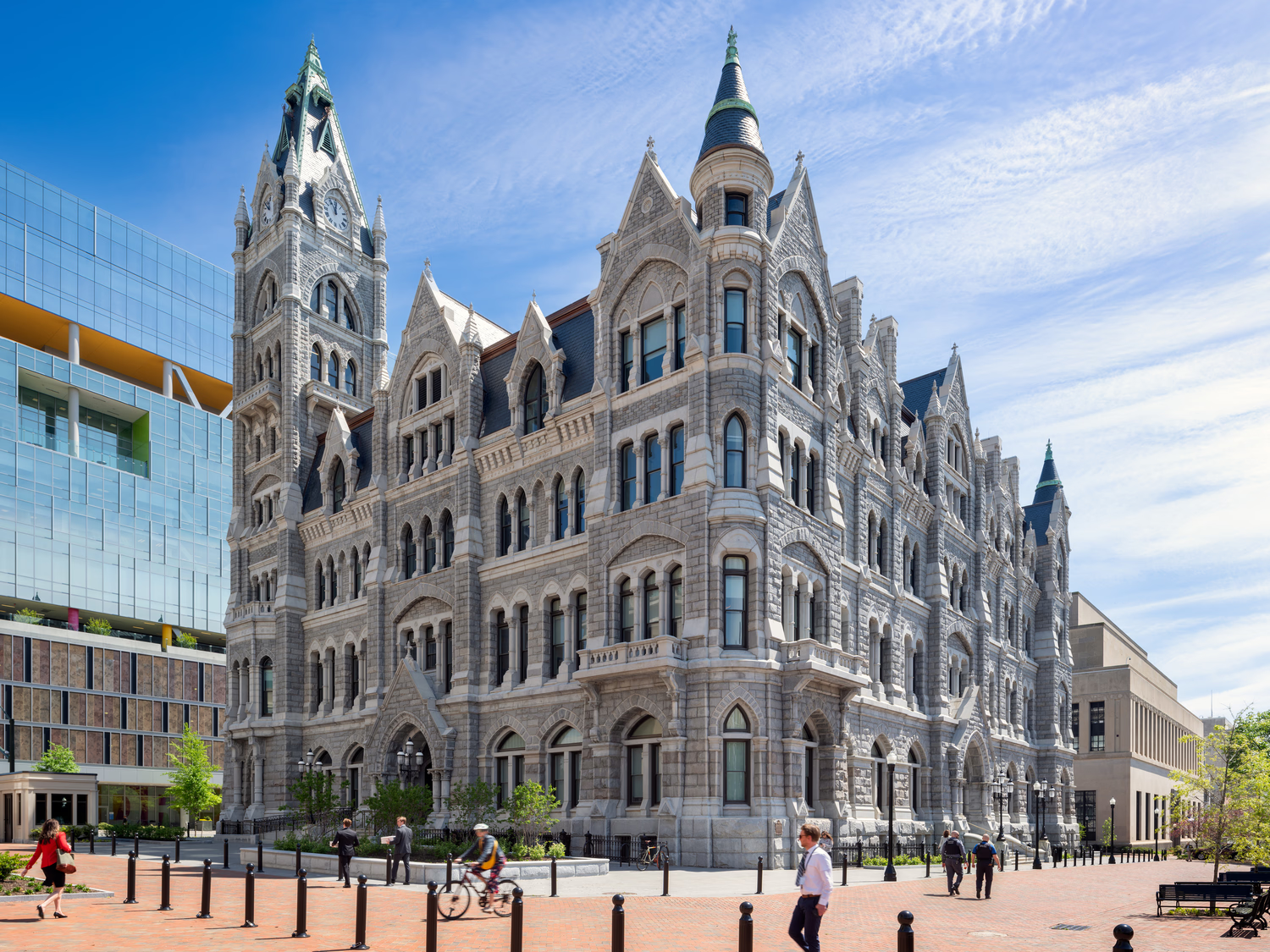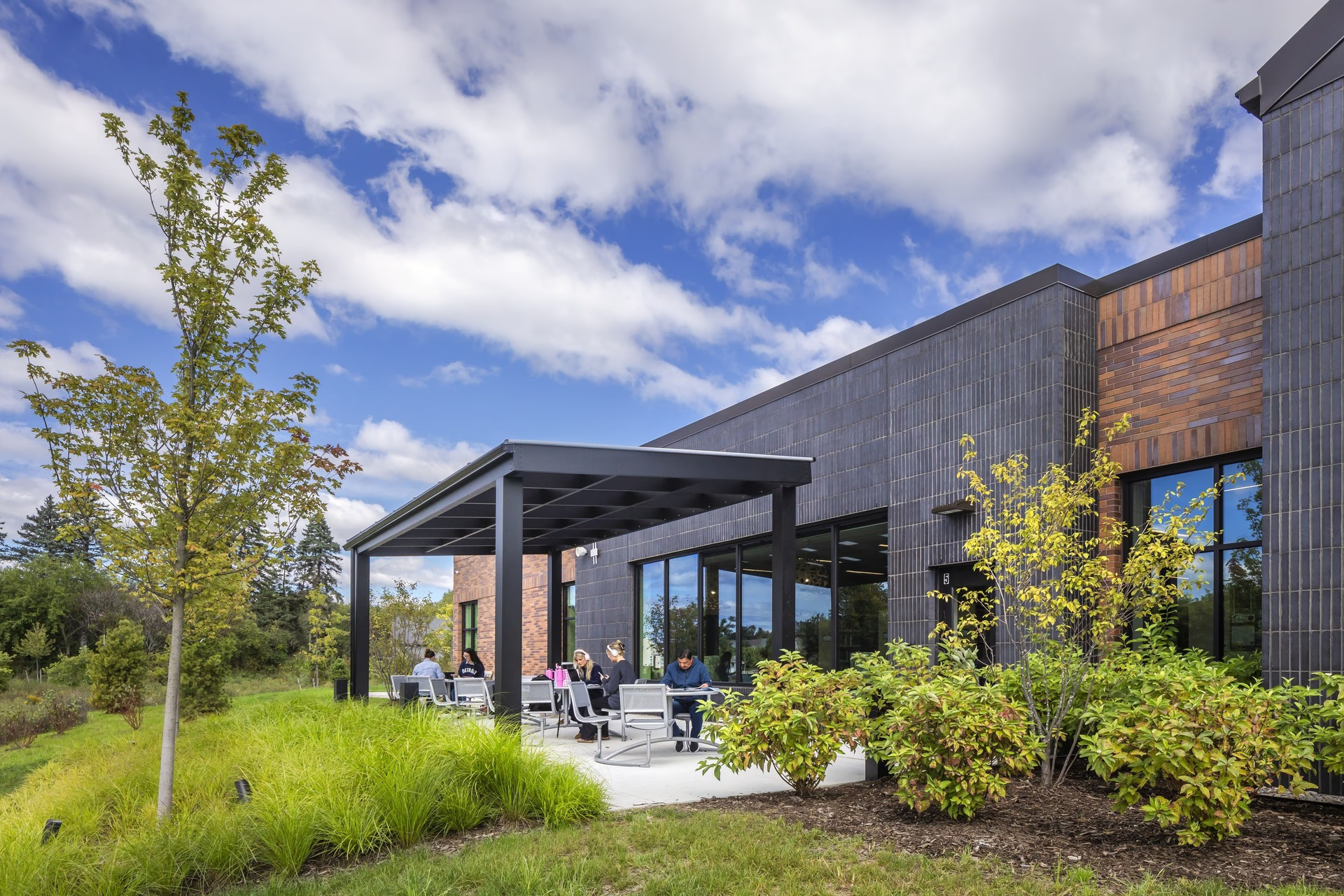
As architects, we put a lot of work into creating beautiful spaces: we consider form, volume, proportion, color, materials, and a host of other variables to form a cohesive whole. But what makes a nice-looking space into a place where people want to be?
This is where placemaking—the creation of connections between people, culture, history, and the built environment—comes in. Traditionally, placemaking has been associated with public spaces: the parks, plazas, streetscapes, and civic gathering places where communities come together. At Quinn Evans, we embrace this definition, but we also push it further by applying placemaking principles to everything we design, including individual buildings and interiors. We strive to create meaningful experiences at every scale of a user's journey, from a city block to a room—or even a piece of furniture.
This broad view reflects our belief that great places are defined less by their physical form than by the experiences they enable. That’s why we approach placemaking as a continuum that links planning, landscape, architecture, interiors, and programming into a cohesive human experience.
A key aspect of our philosophy is the recognition that every place, even a seemingly empty site, has a past. Through our design process, we seek to uncover and strengthen the character, history, and culture that are already present. Our extensive experience in historic preservation, renovation, and adaptive reuse provides a powerful foundation for this work, but even when we’re designing entirely new buildings, we look for ways to reinforce connections to local history and community identity—no matter the scale of the project. Read on to learn how.
CASE STUDY: RESERVOIR PARK
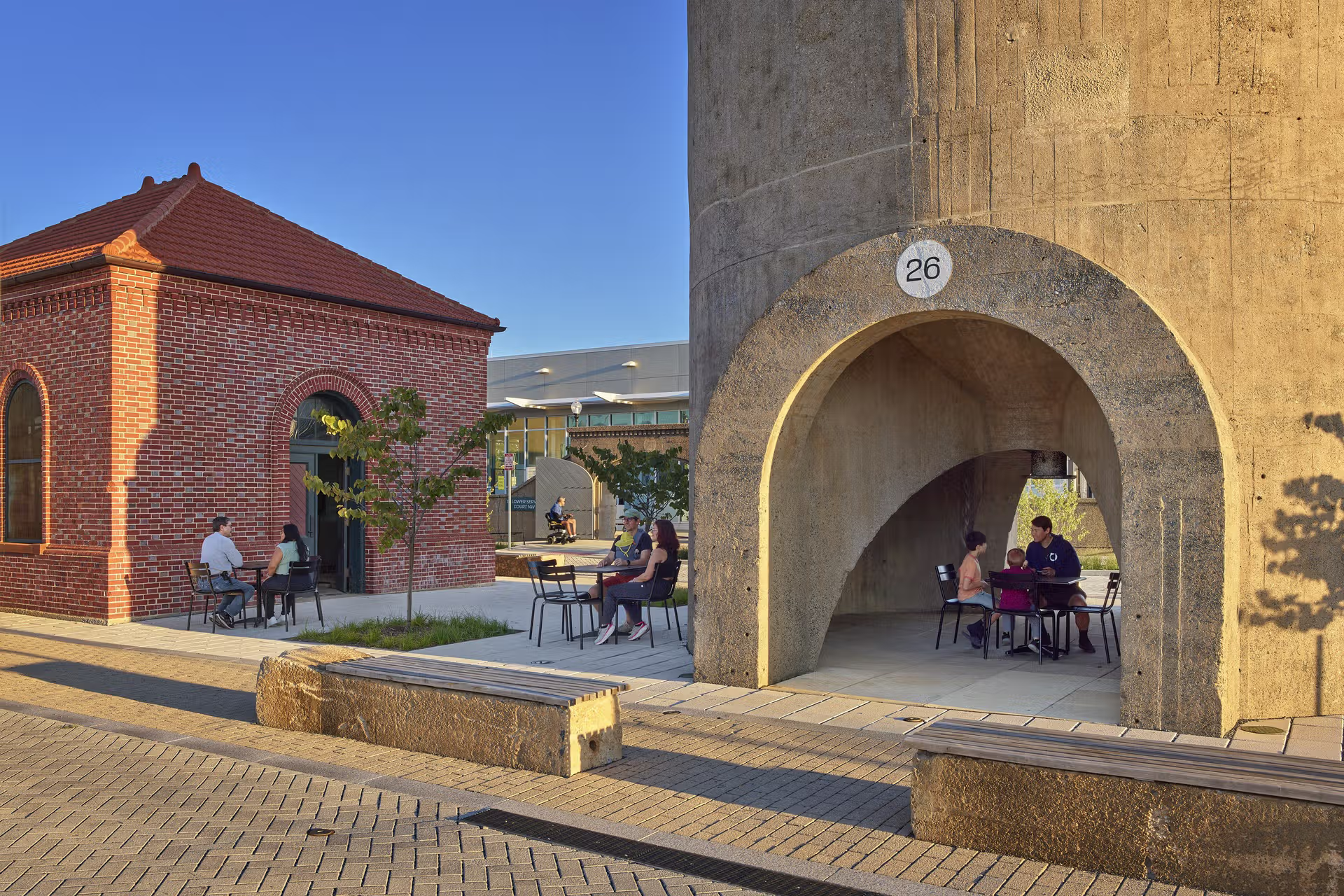
Reservoir Park in Washington, DC, is an example of classic placemaking: an underutilized outdoor space transformed into a public park. Formerly a water treatment plant dating to 1905, the facility was decommissioned in the 1980s but remained fenced off for decades afterward. Through a design-build effort and along with our design team and community partners, we guided the documentation and delivery of a new 6-acre park on the site.
The design preserves and celebrates historic elements (such as the cylindrical sand storage bins—neighborhood icons that have been reused as covered picnic areas) to connect users to the site’s history. The addition of a recreation center, event plaza, splash pad, playground, and expansive lawn has created a vibrant community amenity that has been embraced by neighbors and profiled in Architectural Record.
This new park is easily the coolest park in DC!
FIVE-STAR GOOGLE REVIEW
Why Placemaking Matters
The benefits of placemaking are many. First and foremost, it creates social infrastructure: the settings that support human connection and community building. In an era of fewer shared experiences in physical space, schools, libraries, cultural institutions, and civic facilities serve as vital "third places" where people come together outside of home and work. Well-designed places foster belonging, encourage interaction, and strengthen community ties.
Placemaking also generates tangible value. Spaces that are flexible, welcoming, and meaningful tend to attract more visitors, support a broader range of activities, and remain more active throughout the day and across seasons than those that were not intentionally designed with placemaking in mind. This expanded use can translate into increased revenue opportunities and greater community support. An office building with rentable event spaces, a school that serves neighborhood functions after hours, or a library that supports collaboration, meetings, and social interaction can extend its impact (and audience) far beyond its primary purpose.
Placemaking also strengthens institutional identity. Through thoughtful storytelling, connections to history, and public art, buildings and sites become ambassadors. Whether showcasing the identity of a university, celebrating a community's heritage, or expressing the mission of a nonprofit organization, placemaking helps organizations communicate who they are and why they matter.
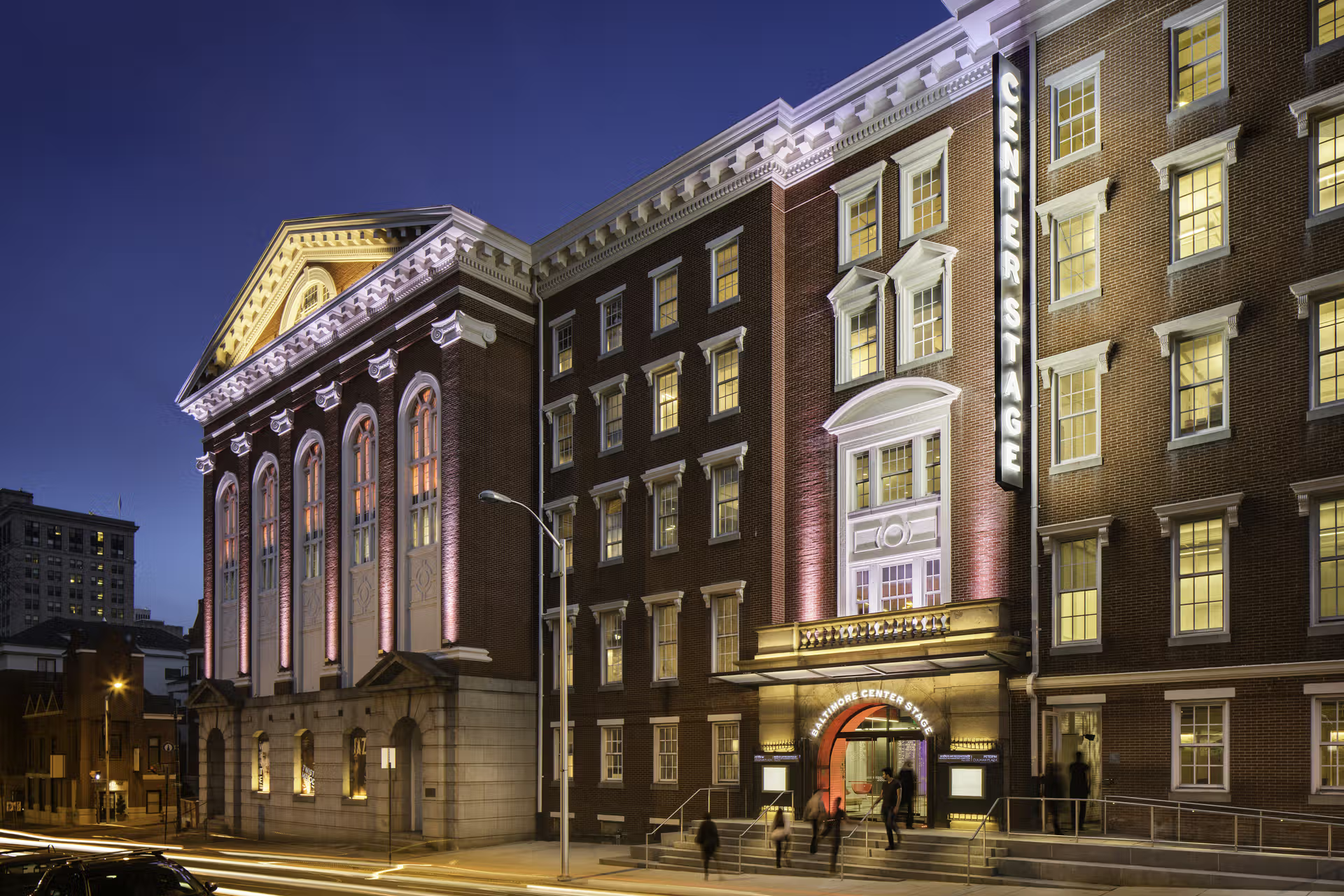
CASE STUDY: CENTER STAGE
Baltimore’s Center Stage shows how placemaking can be accomplished at the building scale. Its tight urban site doesn’t support the outdoor amenities associated with traditional placemaking efforts, but that doesn’t mean it can’t connect to the city. We activated building the façade with programmable LED lights; Center Stage changes their color to celebrate holidays and victories by Baltimore sports teams. We turned part of the ground floor into a coffee shop with its own door onto the street, which provides an additional revenue stream for the theater company, serves as a third place for social connection, and raises awareness of Center Stage’s theatrical offerings among local coffee drinkers.
Great Places Don’t Happen by Accident
A successful placemaking design process begins with planning and discovery, yielding a deep understanding of users and context.
Community engagement is an essential first step. We view stakeholders, users, and neighbors as experts in their own places. Through workshops, meetings, surveys, and collaborative conversations, we seek to understand what people need, what they value, and what they hope to see reflected in the built environment. Beyond gathering information, engagement helps build ownership. People are more likely to feel welcome in a place when they have participated in shaping it. Community involvement creates a stronger sense of belonging and helps ensure that completed projects truly serve their intended audiences.
Archival research also has a role to play. Our historians and preservationists sift through complex histories to understand how a site has changed over time and how stories of significance can and should inform its future. When a place already has deep cultural significance for a community, we refer to placemaking efforts as placekeeping. In our process, community input, historical research, and strategic planning come together to establish a foundation for design decisions.
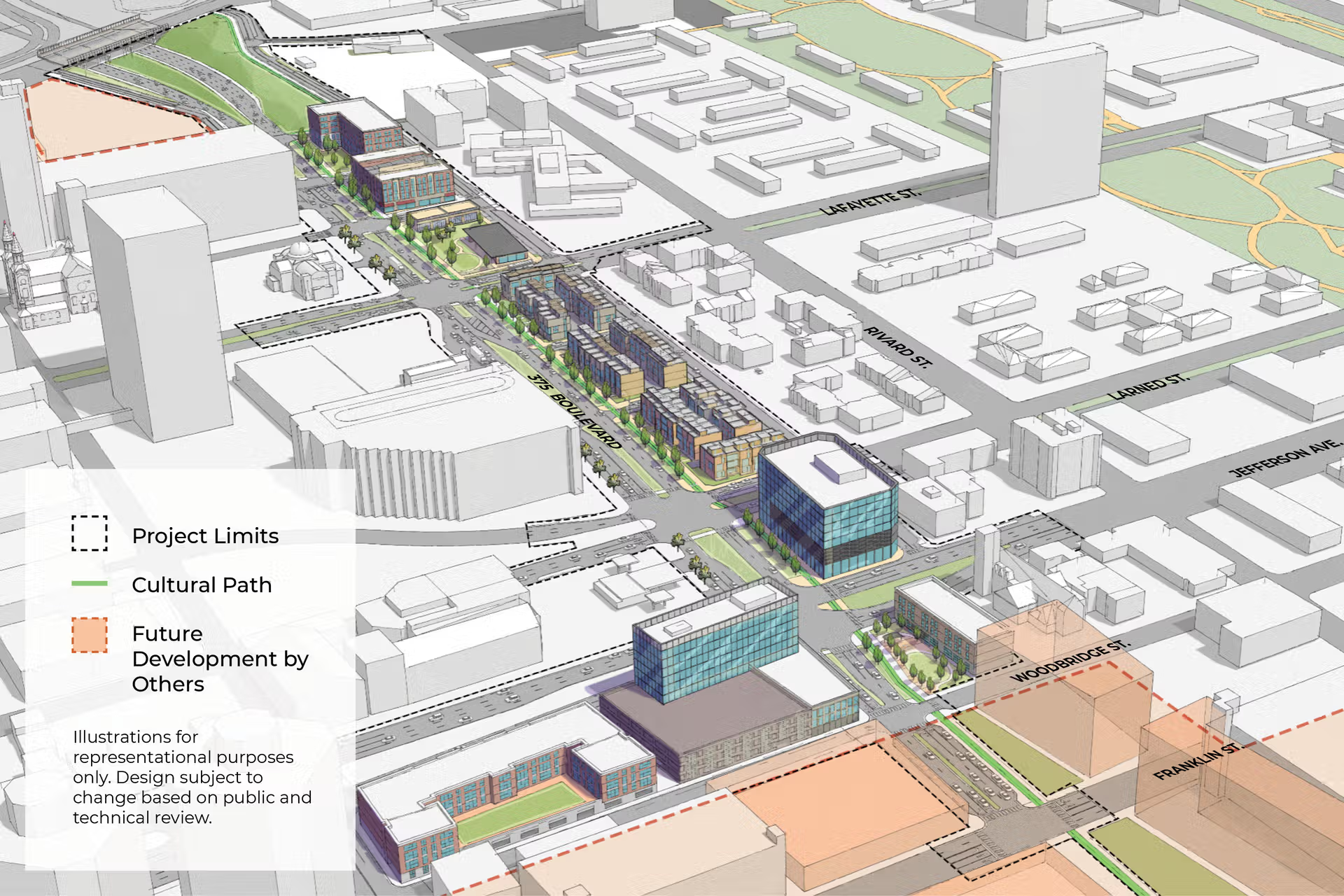
CASE STUDY: I-375 RECONNECTING COMMUNITIES
Zooming out, the I-375 Reconnecting Communities project takes on placemaking at the neighborhood scale. Approximately one mile of I-375 will be converted to a surface-level boulevard, which will improve street connectivity, safety for pedestrians and cyclists, and access to the riverfront.
Our task is to engage with Detroiters, and particularly those affected by the original freeway construction, to develop a Neighborhood Framework Plan for the corridor. Our team assembled a dedicated Arts and Culture Advisory Board to guide and inform our design vision, which includes a “cultural path” integrating historical markers and public art. The cultural path transforms infrastructure into an anchor of identity, turning a transitional corridor into a meaningful destination that fosters belonging and preserves community memory.
Translating Ideas into Places
The design process continues by transforming ideas into physical environments—converting community aspirations, institutional goals, and cultural narratives into spatial experiences.
One of Quinn Evans’ strengths is revealing what is unique and authentic about a place. We look for opportunities to express history, culture, traditions, and local identity through architecture, materials, graphics, art, landscape, and interpretation. Whether preserving traces of an industrial past or celebrating local history in a new library, we seek to create places that feel rooted in their context.
While our design is always based on the needs we uncover during the planning process, we often incorporate elements we call “people magnets”—features that draw people and encourage them to linger. These include:
- Artifacts / “found” features
- Art
- Cafés / food & drinks
- Fireplaces
- Fountains
- Daylight
- Restrooms
- Seating
- Shade
- Views (of nature or activity)
In addition to these tried-and-true placemaking elements, we’re always thinking about accessibility; after all, people won’t gather in a place if they can’t get in the door. With our people-first ethos, we design for and beyond mandates to empower people with all kinds of differences—not least because strategies that support one group often improve the user experience for everyone.
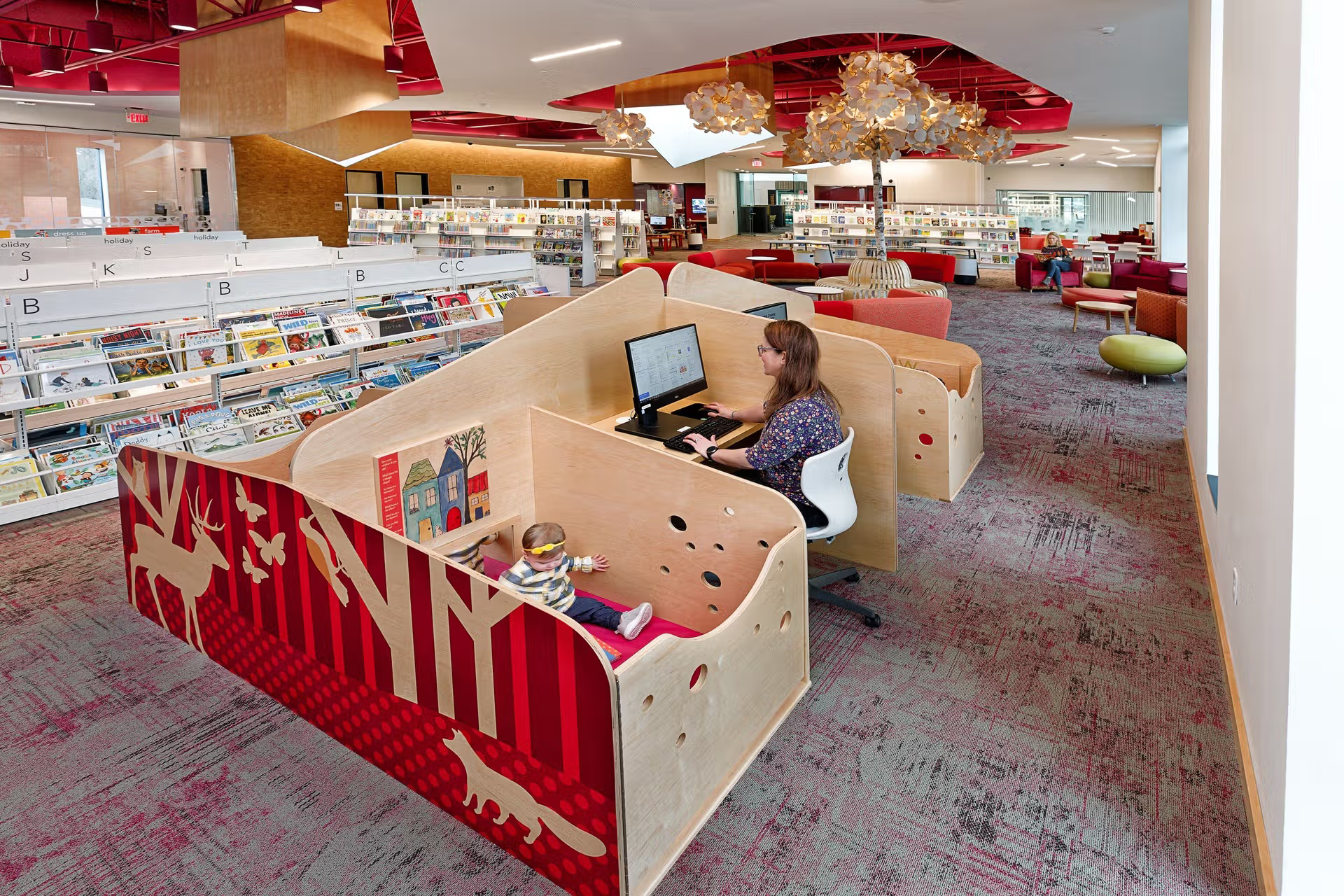
CASE STUDY: FAIRFIELD PARENT+CHILD CARREL
Accessibility comes in many forms. For Fairfield Library in Henrico County, Virginia, we worked with furniture manufacturer TMC to design a new piece of furniture that combines a computer workstation with a playpen. Developed in response to a community need, the carrel helps caregivers use a library computer while looking after an infant or toddler.
This is placemaking at the scale of an individual piece of furniture. The carrel removes a barrier that many people faced when they wanted to use a common library service, allowing them to stay longer and be more productive at the library while supporting the child-caregiver bond. Since a tweet about the carrel went viral in 2022, it has been adopted by libraries around the world.
It just hit this raw nerve where I think everyone felt like, ‘Yes, we’re being seen.’
ALI FARUK, AUTHOR OF THE VIRAL TWEET (QUOTED IN THE WASHINGTON POST)
From Space to Place
Our approach to placemaking results in designs that balance history and innovation, individual needs and collective experiences, functional requirements and emotional connections—all in the name of creating places that endure. For us, placemaking is a framework for understanding how architecture can create lasting value for communities, institutions, and the people they serve.